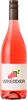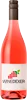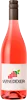
Winery RoquebrunTerrasses de Mayline Saint-Chinian Rosé
 Pink wine
In the mouth this pink wine is a with a nice freshness.
This wine generally goes well with vegetarian, appetizers and snacks or lean fish.
Taste structure of the Terrasses de Mayline Saint-Chinian Rosé from the Winery Roquebrun
Light | Bold | |
Dry | Sweet | |
Soft | Acidic |
In the mouth the Terrasses de Mayline Saint-Chinian Rosé of Winery Roquebrun in the region of Languedoc-Roussillon is a with a nice freshness.
Food and wine pairings with Terrasses de Mayline Saint-Chinian Rosé
Pairings that work perfectly with Terrasses de Mayline Saint-Chinian Rosé



Original food and wine pairings with Terrasses de Mayline Saint-Chinian Rosé


The Terrasses de Mayline Saint-Chinian Rosé of Winery Roquebrun matches generally quite well with dishes of pasta, vegetarian or appetizers and snacks such as recipes of pasta carbonara, goat cheese and bacon quiche or preparation of the olives (black olives in brine).
Details and technical informations about Winery Roquebrun's Terrasses de Mayline Saint-Chinian Rosé.
Discover the grape variety: Zweigelt
Intraspecific crossing between the saint laurent and the limberger realized in 1922 and in Austria by Fritz Zweigelt (1888/1964) who named it rotburger. Very well known in Austria, it can be found in most Eastern countries, Japan, Germany, Great Britain, the Netherlands, Belgium, Switzerland, Italy, Canada, the United States, etc. In France, it is not very well known and yet this variety has interesting qualities when vinified as a single variety for both red and rosé wines. - Synonyms: rotburger, klosterneuburger, zweigelt blau, blauer-zweigelt in Germany, zweigeltrebe in Austria, Great Britain and the Czech Republic, blauer zwelgetrabe in Hungary, etc. (for all the synonyms of the grape varieties, click here !)
Informations about the Winery Roquebrun
The Winery Roquebrun is one of of the world's great estates. It offers 82 wines for sale in the of Saint-Chinian to come and discover on site or to buy online.

The wine region of Saint-Chinian
Saint-Chinian is an appellation in the Languedoc-roussillon">Languedoc-Roussillon wine region of southern France. It is located between Minervois and Faugeres, which produce similar styles of robust red wine from similar grapes and in a similar landscape. It is also adjacent to the Muscat de Saint-Jean-de-Minervois appellation, which produces Sweet white wines. Therefore, the diversity of the Languedoc region is well demonstrated in this small area.
The wine region of Languedoc-Roussillon
Languedoc (formerly Coteaux du Languedoc) is a key appellation used in the Languedoc-Roussillon wine region of southern France. It covers Dry table wines of all three colors (red, white and rosé) from the entire region, but leaves Sweet and Sparkling wines to other more specialized appellations. About 75% of all Languedoc wines are red, with the remaining 25% split roughly down the middle between whites and rosés. The appellation covers most of the Languedoc region and almost a third of all the vineyards in France.
The word of the wine: Wiring
Action of periodically filling barrels containing wine, in order to offset evaporation and maintain a maximum level. The topping up allows to avoid the phenomenon of oxidation.