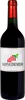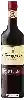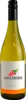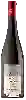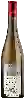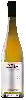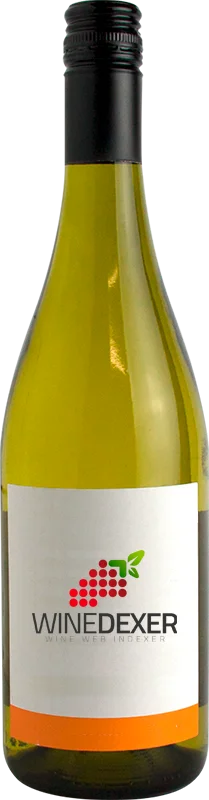
Winery Rollsdorfer MühleSaale-Unstrut Stedtener Pastorenstieg Weissburgunder Spätlese Lieblich
 White wine
In the mouth this white wine is a with a nice freshness.
This wine generally goes well with rich fish (salmon, tuna etc), shellfish or mild and soft cheese.
Taste structure of the Saale-Unstrut Stedtener Pastorenstieg Weissburgunder Spätlese Lieblich from the Winery Rollsdorfer Mühle
Light | Bold | |
Dry | Sweet | |
Soft | Acidic |
In the mouth the Saale-Unstrut Stedtener Pastorenstieg Weissburgunder Spätlese Lieblich of Winery Rollsdorfer Mühle in the region of Saale-Unstrut is a with a nice freshness.
Food and wine pairings with Saale-Unstrut Stedtener Pastorenstieg Weissburgunder Spätlese Lieblich
Pairings that work perfectly with Saale-Unstrut Stedtener Pastorenstieg Weissburgunder Spätlese Lieblich



Original food and wine pairings with Saale-Unstrut Stedtener Pastorenstieg Weissburgunder Spätlese Lieblich

The Saale-Unstrut Stedtener Pastorenstieg Weissburgunder Spätlese Lieblich of Winery Rollsdorfer Mühle matches generally quite well with dishes of rich fish (salmon, tuna etc), shellfish or mild and soft cheese such as recipes of tuna omelette, scallops with cream or spinach and mozzarella omelette.
Details and technical informations about Winery Rollsdorfer Mühle's Saale-Unstrut Stedtener Pastorenstieg Weissburgunder Spätlese Lieblich.
Discover the grape variety: Fer-servadou
Fer-servadou noir is a grape variety that originated in France (Gironde). It produces a variety of grape specially used for wine making. It is rare to find this grape to eat on our tables. This variety of grape is characterized by large bunches, and grapes of small to medium size. Fer-servadou noir can be found in several vineyards: South-West, Languedoc & Roussillon, Cognac, Bordeaux, Armagnac, Provence & Corsica, Rhone Valley.
Informations about the Winery Rollsdorfer Mühle
The Winery Rollsdorfer Mühle is one of of the world's greatest estates. It offers 13 wines for sale in the of Saale-Unstrut to come and discover on site or to buy online.

The wine region of Saale-Unstrut
Saale-Unstrut is the northernmost of Germany's 13 wine-growing regions. At 51 degrees northern latitude, it is one of the most northerly wine regions in the world. It takes its name from the two rivers on the banks of which the Vines of the region grow, and is composed of three non-contiguous Parts located mainly in the federal state of Saxony-Anhalt, with around 650 hectares (1600 acres) of Vineyards, often terraced, on South and south-west-facing slopes along the narrow river valleys. A smaller area of 20 hectares (50 acres) is located in the state of Thüringen and a block of just 7 hectares (17 acres) in Brandenburg.
The word of the wine: White winemaking
White wines are obtained by fermentation of the juice after pressing. A pre-fermentation maceration is sometimes practiced to extract the aromatic substances from the skins. White wines are normally made from white grapes, but can also be made from red grapes (blanc de noirs). The grapes are then pressed as soon as they arrive at the vat house without maceration in order to prevent the colouring matter contained in the skins from "staining" the wine.