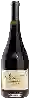
Winery Quinta do CondePagode Tinto
 Red wine


In the mouth this red wine is a powerful.
This wine generally goes well with poultry, beef or veal.

Taste structure of the Pagode Tinto from the Winery Quinta do Conde
Light | Bold | |
Smooth | Tannic | |
Dry | Sweet | |
Soft | Acidic |
In the mouth the Pagode Tinto of Winery Quinta do Conde in the region of Lisboa is a powerful.
Food and wine pairings with Pagode Tinto
Pairings that work perfectly with Pagode Tinto



Original food and wine pairings with Pagode Tinto

The Pagode Tinto of Winery Quinta do Conde matches generally quite well with dishes of beef, pasta or veal such as recipes of baeckeoffe, chinese noodles with vegetables and spices or veal liver in vinegar.
Details and technical informations about Winery Quinta do Conde's Pagode Tinto.
Discover the grape variety: Couderc
Simple, colourful and fruity reds with a deep ruby colour, supple tannins and a light palate with moderate acidity, showing aromas of red fruits and discreet hybrid notes. Productive and resistant to phylloxera. Now marginal, it survives in a few heritage plots and French ampelographic collections, a witness to post-phylloxera hybridisation. French black hybrid variety obtained by Georges Couderc at the end of the 19th century.
Last vintages of this wine
The best vintages of Pagode Tinto from Winery Quinta do Conde are 0, 2018
Informations about the Winery Quinta do Conde
The Winery Quinta do Conde is one of of the world's great estates. It offers 39 wines for sale in the of Lisboa to come and discover on site or to buy online.

The wine region of Lisboa
Vast coastal IGP north of Lisbon, Portugal's largest producer by volume. Accessible, sun-filled reds: fruity, spicy Castelão, dense Touriga Nacional (black fruit, violet), fleshy Trincadeira, deep Alicante Bouschet. Fresh, mineral whites: straight, lemony Arinto (star of Bucelas), aromatic Fernão Pires, round Vital and Malvasia. Structured reds from Alenquer, sparkling at Óbidos.
The word of the wine: Vintage scale
Complex system of classification of the communes of Champagne according to the value of the grapes which are produced there. In other regions, hierarchical situation of the productions classified by various authorities.