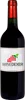
Winery Quinta das EirasCantos do Mar Albariño
 wine
wine
This wine generally goes well with
The Cantos do Mar Albariño of the Winery Quinta das Eiras is in the top 0 of wines of Rías Baixas.
Details and technical informations about Winery Quinta das Eiras's Cantos do Mar Albariño.
Discover the grape variety: Dan ben Hannah
A cross between the black mikveh (Hamburg muscatel x black balouti) and the Alphonse Lavallée obtained in 1951 and in Israel by Netanel Hochberg. Dan ben Hannah or black emperor - not to be confused with emperor - is mainly grown in South Africa.
Informations about the Winery Quinta das Eiras
The Winery Quinta das Eiras is one of of the world's greatest estates. It offers 2 wines for sale in the of Rías Baixas to come and discover on site or to buy online.

The wine region of Rías Baixas
The wine region of Rías Baixas is located in the region of Galice of Spain. Wineries and vineyards like the Domaine Raúl Pérez or the Domaine Pazo de Rubianes produce mainly wines white, sparkling and red. The most planted grape varieties in the region of Rías Baixas are Albarino, Loureiro and Caino blanco, they are then used in wines in blends or as a single variety. On the nose of Rías Baixas often reveals types of flavors of grapefruit, mint or chamomile and sometimes also flavors of apple blossom, green melon or beeswax.
The wine region of Galice
Galicia is one of the 17 first-level administrative regions (called comunidades autónomas) of Spain. It occupies the northwestern corner of the Iberian Peninsula, and is exposed on two sides to the Atlantic Ocean. To the South is Portugal, to the east Castilla y Leon. Viticulture has a Long tradition in Galicia, introduced to the region by the ancient Romans and continued by monks throughout the Middle Ages.
The word of the wine: Oenologist
Specialist in wine-making techniques. It is a profession and not a passion: one can be an oenophile without being an oenologist (and the opposite too!). Formerly attached to the Faculty of Pharmacy, oenology studies have become independent and have their own university course. Learning to make wine requires a good chemical background but also, increasingly, a good knowledge of the plant. Some oenologists work in laboratories (analysis). Others, the consulting oenologists, work directly in the properties.