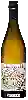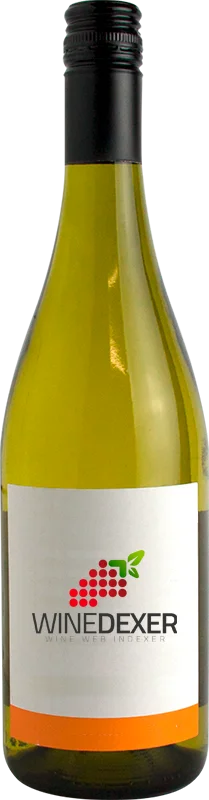
Winery Paul RogenwieserSauvignon Blanc Trocken
 White wine
In the mouth this white wine is a with a nice freshness.
This wine generally goes well with vegetarian, shellfish or goat cheese.
Taste structure of the Sauvignon Blanc Trocken from the Winery Paul Rogenwieser
Light | Bold | |
Dry | Sweet | |
Soft | Acidic |
In the mouth the Sauvignon Blanc Trocken of Winery Paul Rogenwieser in the region of Pfalz is a with a nice freshness.
Food and wine pairings with Sauvignon Blanc Trocken
Pairings that work perfectly with Sauvignon Blanc Trocken



Original food and wine pairings with Sauvignon Blanc Trocken
The Sauvignon Blanc Trocken of Winery Paul Rogenwieser matches generally quite well with dishes of shellfish, vegetarian or goat cheese such as recipes of panga curry, quiche with bacon and gruyère cheese or three-cheese tart (roquefort, goat, emmental).
Details and technical informations about Winery Paul Rogenwieser's Sauvignon Blanc Trocken.
Discover the grape variety: Garanoir
Intraspecific cross between Gamay and Reichensteiner obtained in 1970 by André Jacquinet at the Agroscope Changins-Wädenswil research station (Switzerland). From this same crossbreed, Gamaret and Mara were also born.
Informations about the Winery Paul Rogenwieser
The Winery Paul Rogenwieser is one of of the world's greatest estates. It offers 31 wines for sale in the of Pfalz to come and discover on site or to buy online.

The wine region of Pfalz
Pfalz is a key wine producing region in western Germany, located between the Rhein/Rhine river and the low-lying Haardt mountain range (a natural continuation of the Alsatian Vosges). It covers a rectangle of land 45 miles (75km) Long and 15 miles (25km) wide. To the NorthLiesRheinhessen; to the South, the French border and Alsace. In terms of both quality and quantity, Pfalz is one of Germany's most important regions, and one which shows great promise for the future.
The word of the wine: Cinsault
Cinsault is a southern black grape variety that can be found in the blends of most Mediterranean appellations, but most often as an accessory grape variety. It is undoubtedly most present in certain rosé wines (in Corbières, Côtes-de-Provence, etc.): it gives these wines highly appreciated aromas of strawberry, peach and raspberry. In vin de pays (IGP), it is often vinified on its own, usually as a rosé.