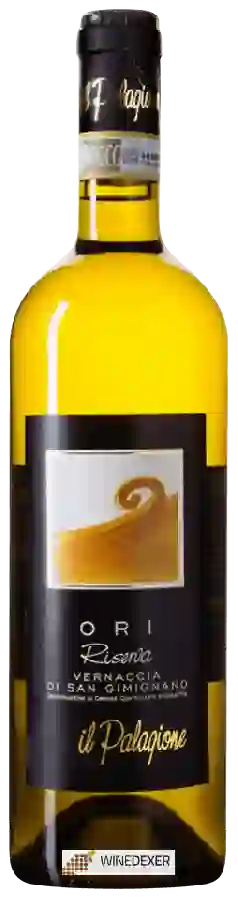
Winery Il PalagioneOri Vernaccia di San Gimignano Riserva
 White wine


This wine generally goes well with
Wine flavors and olphactive analysis



On the nose the Ori Vernaccia di San Gimignano Riserva of Winery Il Palagione in the region of Tuscany often reveals types of flavors of microbio, oak or spices.
Details and technical informations about Winery Il Palagione's Ori Vernaccia di San Gimignano Riserva.
Discover the grape variety: Canari
The Canary is rarely found in today's vineyards. Its origins are probably in the Pyrenees, precisely in the Ariège. Its repertoire of alternative appellations is vast. Boudalès from the Cévennes becomes folle noire in Fronton. It is also known as chalosse noire, ugne noire or canaril, and can be recognized by its early buds. The very productive vine shows remarkable vigour. Even the black rot does not get the better of this variety. The shoots are covered with foliage, the most exposed parts of which turn red in the autumn. When the grapes reach maturity, which occurs in the second late season, the Canari displays compact, section-shaped bunches of small to medium size. The fins are sometimes very crowded, gathering berries with characteristic colors. The bluish-black shell protects a very juicy flesh. A rather lightly coloured and ordinary wine emerges from the vinification of this variety.
Last vintages of this wine

The best vintages of Ori Vernaccia di San Gimignano Riserva from Winery Il Palagione are 2018, 2014, 2013, 2017 and 2012.
Informations about the Winery Il Palagione
The Winery Il Palagione is one of of the world's greatest estates. It offers 12 wines for sale in the of Vernaccia di San Gimignano to come and discover on site or to buy online.

The wine region of Vernaccia di San Gimignano
The wine region of Vernaccia di San Gimignano is located in the region of San Gimignano of Toscane of Italy. Wineries and vineyards like the Domaine Vagnoni or the Domaine Vagnoni produce mainly wines white, red and sparkling. The most planted grape varieties in the region of Vernaccia di San Gimignano are Chardonnay, Sangiovese and Vermentino, they are then used in wines in blends or as a single variety. On the nose of Vernaccia di San Gimignano often reveals types of flavors of citrus, mango or grass and sometimes also flavors of straw, grapefruit or caramel.
The wine region of Tuscany
Tuscany is one of the most famous and prolific wine regions in Europe. It is best known for its Dry red wines made from Sangiovese grapes, which dominate production. These include Chianti, Brunello di Montalcino and Vino Nobile di Montepulciano. The region's Vin Santo is also highly prized, as are its passito dessert wines, though these are produced in comparatively tiny quantities.
The word of the wine: Ploussard
See poulsard.