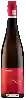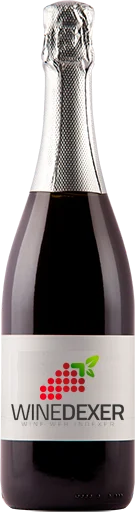
Winery OberrotweilOberrotweiler Käsleberg Spätburgunder Trocken
 Sparkling wine



This wine generally goes well with vegetarian



Food and wine pairings with Oberrotweiler Käsleberg Spätburgunder Trocken
Pairings that work perfectly with Oberrotweiler Käsleberg Spätburgunder Trocken

Original food and wine pairings with Oberrotweiler Käsleberg Spätburgunder Trocken
The Oberrotweiler Käsleberg Spätburgunder Trocken of Winery Oberrotweil matches generally quite well with dishes of vegetarian such as recipes of nanie's diced ham quiche.
Details and technical informations about Winery Oberrotweil's Oberrotweiler Käsleberg Spätburgunder Trocken.
Discover the grape variety: Danam
Simple, fresh dry whites with a pale golden robe, a supple palate with moderate acidity, and undemonstrative aromas of citrus and white flowers. A discreet rustic profile. Preserved in a few ampelographic collections, Danam is an ancient heritage variety whose commercial cultivation has almost vanished; it is studied for its genetic and historical interest. A rare, poorly documented white grape grown in negligible quantities.
Last vintages of this wine
The best vintages of Oberrotweiler Käsleberg Spätburgunder Trocken from Winery Oberrotweil are 2018, 2016, 2015, 2017
Informations about the Winery Oberrotweil
The Winery Oberrotweil is one of of the world's great estates. It offers 75 wines for sale in the of Baden to come and discover on site or to buy online.

The wine region of Baden
German capital of Pinot Noir (Spätburgunder): silky, fine reds with notes of red fruits, cherry, undergrowth and sweet spices, melted tannins. Round Grauburgunder (Pinot Gris), lively Weissburgunder, supple Müller-Thurgau, mineral Riesling. Germany's 3rd region (15,000 ha) in Baden-Württemberg facing Alsace, one of the country's warmest climates, volcanic soils at the Kaiserstuhl. Cradle of modern great German reds, elegant and fine.
The word of the wine: Effervescent
Any wine loaded with CO2 (carbon dioxide), which is revealed in the form of bubbles, reinforcing the freshness effect in the mouth. This gas production is the result of what is called the second fermentation in the bottle. It occurs in champagnes and sparkling wines such as crémants.