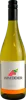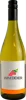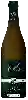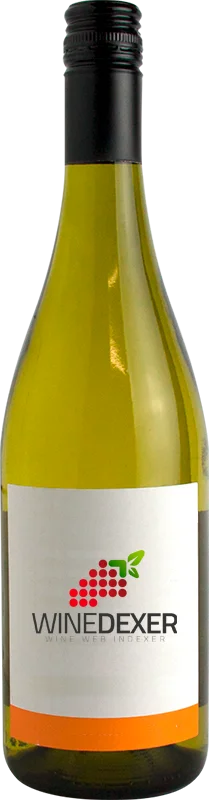
Winery NägelsförstPinot Blanc Dry
 White wine



In the mouth this white wine is a with a nice freshness.
This wine generally goes well with rich fish (salmon, tuna etc), shellfish or mild and soft cheese.

Taste structure of the Pinot Blanc Dry from the Winery Nägelsförst
Light | Bold | |
Dry | Sweet | |
Soft | Acidic |
In the mouth the Pinot Blanc Dry of Winery Nägelsförst in the region of Baden is a with a nice freshness.
Food and wine pairings with Pinot Blanc Dry
Pairings that work perfectly with Pinot Blanc Dry



Original food and wine pairings with Pinot Blanc Dry

The Pinot Blanc Dry of Winery Nägelsförst matches generally quite well with dishes of rich fish (salmon, tuna etc), shellfish or mild and soft cheese such as recipes of leek and salmon lasagna, shrimp with oyster sauce or bruschetta.
Details and technical informations about Winery Nägelsförst's Pinot Blanc Dry.
Discover the grape variety: Pinot gris
Rich, ample whites with a golden robe, showing aromas of pear, quince, honey, smoke, ginger and spice. Made as structured dry wines (Alsace AOC), off-dry and sumptuous late-harvest sweet (vendange tardive, sélection de grains nobles). Lighter and crisper in Italy as Pinot Grigio (Veneto, Friuli). Also in Germany (Grauburgunder), Hungary (Szürkebarát) and Oregon. A grey mutation of Pinot Noir.
Last vintages of this wine
The best vintages of Pinot Blanc Dry from Winery Nägelsförst are 2016, 0
Informations about the Winery Nägelsförst
The Winery Nägelsförst is one of of the world's great estates. It offers 64 wines for sale in the of Baden to come and discover on site or to buy online.

The wine region of Baden
German capital of Pinot Noir (Spätburgunder): silky, fine reds with notes of red fruits, cherry, undergrowth and sweet spices, melted tannins. Round Grauburgunder (Pinot Gris), lively Weissburgunder, supple Müller-Thurgau, mineral Riesling. Germany's 3rd region (15,000 ha) in Baden-Württemberg facing Alsace, one of the country's warmest climates, volcanic soils at the Kaiserstuhl. Cradle of modern great German reds, elegant and fine.
The word of the wine: Chaptalization
The addition of sugar at the time of fermentation of the must, an ancient practice, but theorized by Jean-Antoine Chaptal at the dawn of the 19th century. The sugar is transformed into alcohol and allows the natural degree of the wine to be raised in a weak or cold year, or - more questionably - when the winegrower has a harvest that is too large to obtain good maturity.