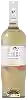
Winery Musto CarmelitanoMaschitano Bianco di Basilicata
 White wine



In the mouth this white wine is a powerful.
This wine generally goes well with vegetarian, appetizers and snacks or shellfish.
Taste structure of the Maschitano Bianco di Basilicata from the Winery Musto Carmelitano
Light | Bold | |
Dry | Sweet | |
Soft | Acidic |
In the mouth the Maschitano Bianco di Basilicata of Winery Musto Carmelitano in the region of Basilicata is a powerful.
Food and wine pairings with Maschitano Bianco di Basilicata
Pairings that work perfectly with Maschitano Bianco di Basilicata



Original food and wine pairings with Maschitano Bianco di Basilicata
The Maschitano Bianco di Basilicata of Winery Musto Carmelitano matches generally quite well with dishes of shellfish, vegetarian or appetizers and snacks such as recipes of calamari with chorizo, mushroom, bacon and gruyere quiche or baked vegetable chips.
Details and technical informations about Winery Musto Carmelitano's Maschitano Bianco di Basilicata.
Discover the grape variety: Muscat rge de Madère
A very old variety of table grape that is now almost extinct. It can still be found in Italy, Portugal, Romania, Moldavia, ... in France, it can only be found among amateur gardeners and/or collectors. It is given as originating from Portugal, others from Romania. D.N.A. analyses carried out in 2007 allow us to confirm that it is indeed a natural intraspecific cross between the muscat à petits grains blancs and the sciaccarello or mammolo nero.
Last vintages of this wine
The best vintages of Maschitano Bianco di Basilicata from Winery Musto Carmelitano are 2015, 0
Informations about the Winery Musto Carmelitano
The Winery Musto Carmelitano is one of of the world's greatest estates. It offers 8 wines for sale in the of Basilicata to come and discover on site or to buy online.

The wine region of Basilicata
Basilicata, in Southern Italy, is a region whose name rarely appears in wine circles. It is best known for its red wines made from the Aglianico grape, and in particular for the Aglianico del Vulture appellation. It has only four DOCs, which collectively cover only two of every 100 bottles produced here. The remaining 98% is sold under IGT or, more likely, Vino da Tavola.
The word of the wine: VDN
Natural sweet wine. Wine obtained by mutage of the must during fermentation by adding over-finished alcohol at 96 °, produced in the vineyards of Roussillon, Languedoc, Rhone Valley and Corsica.