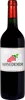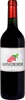
Winery MovinoEmócia Frankovka Modrá
 Red wine



This wine generally goes well with pork, rich fish (salmon, tuna etc) or mature and hard cheese.
Food and wine pairings with Emócia Frankovka Modrá
Pairings that work perfectly with Emócia Frankovka Modrá



Original food and wine pairings with Emócia Frankovka Modrá

The Emócia Frankovka Modrá of Winery Movino matches generally quite well with dishes of pork, rich fish (salmon, tuna etc) or mature and hard cheese such as recipes of fricadella, skate with vinegar and capers or salted king's cake with cauliflower.
Details and technical informations about Winery Movino's Emócia Frankovka Modrá.
Discover the grape variety: Berdomenel
Spanish, present for a long time in the vineyard of Pamiers in Ariège. Today, it is no longer multiplied and is therefore in danger of extinction.
Last vintages of this wine
The best vintages of Emócia Frankovka Modrá from Winery Movino are 2018, 0, 2017
Informations about the Winery Movino
The Winery Movino is one of of the world's great estates. It offers 85 wines for sale in the of Slovakia to come and discover on site or to buy online.

The wine region of Slovakia
Slovakia (officially The Slovak Republic) is a landlocked country described as being either at the eastern edge of Western Europe, or the western edge of Eastern Europe. This dichotomy reflects the state's recent history, a story of political unrest common in this region. The lands that are now Slovakia were an integral Part of Hungary for almost 900 years, but became independent when the Austro-Hungarian Empire was dismantled after the First World War. Almost immediately, Slovakia aligned itself with Bohemia and Moravia (the modern-day Czech Republic), Silesia and Carpathian Ruthenia to form Czechoslovakia.
The word of the wine: Performance
Quantity of grapes harvested per hectare. In AOC, the average yield is limited on the proposal of the appellation syndicate, validated by the Inao. The use of high-performance plant material (especially clones) and better control of vine diseases have increased yields. This is not without consequences on the quality of the wines (dilution) and on the state of the market (too much wine). We must not over-simplify: low yields are not synonymous with quality, and it is often in years with generous harvests that we find the greatest vintages (1982 and 1986 in Bordeaux, 1996 in Champagne, 1990 and 2005 in Burgundy...).