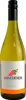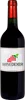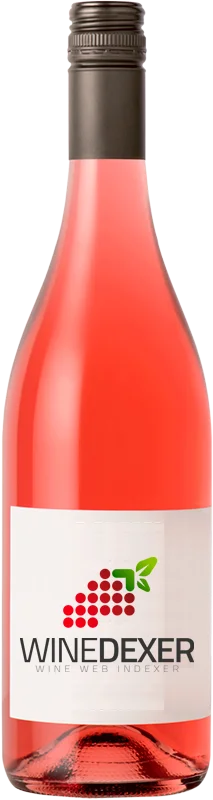
Winery MontsartRosé
 Pink wine
In the mouth this pink wine is a with a nice freshness.
This wine generally goes well with vegetarian, appetizers and snacks or lean fish.
Taste structure of the Rosé from the Winery Montsart
Light | Bold | |
Dry | Sweet | |
Soft | Acidic |
In the mouth the Rosé of Winery Montsart in the region of Languedoc-Roussillon is a with a nice freshness.
Food and wine pairings with Rosé
Pairings that work perfectly with Rosé



Original food and wine pairings with Rosé


The Rosé of Winery Montsart matches generally quite well with dishes of pasta, vegetarian or appetizers and snacks such as recipes of pasta with 4 cheese sauce, quiche without pastry, courgette and blue cheese or baked vegetable chips.
Details and technical informations about Winery Montsart's Rosé.
Discover the grape variety: Chelois
Interspecific cross between 5163 Seibel (2 Gaillard x 2510 Seibel) and 5593 Seibel (880 Seibel x 4202 Seibel) obtained by Albert Seibel (1844-1936). The Chelois is related to the De Chaunac and the Chancellor. It has been propagated in Canada since 1946 and 1948 for the United States, in France it is no longer planted, therefore no longer present in the vineyard and almost disappearing.
Informations about the Winery Montsart
The Winery Montsart is one of of the world's greatest estates. It offers 3 wines for sale in the of Languedoc to come and discover on site or to buy online.

The wine region of Languedoc
Languedoc (formerly Coteaux du Languedoc) is a key appellation used in the Languedoc-Roussillon wine region of southern France. It covers Dry table wines of all three colors (red, white and rosé) from the entire region, but leaves Sweet and Sparkling wines to other more specialized appellations. About 75% of all Languedoc wines are red, with the remaining 25% split roughly down the middle between whites and rosés. The appellation covers most of the Languedoc region and almost a third of all the vineyards in France.
The wine region of Languedoc-Roussillon
Languedoc (formerly Coteaux du Languedoc) is a key appellation used in the Languedoc-Roussillon wine region of southern France. It covers Dry table wines of all three colors (red, white and rosé) from the entire region, but leaves Sweet and Sparkling wines to other more specialized appellations. About 75% of all Languedoc wines are red, with the remaining 25% split roughly down the middle between whites and rosés. The appellation covers most of the Languedoc region and almost a third of all the vineyards in France.
The word of the wine: Anthocyanins
Phenolic compounds present in the skin of grapes that give colour to red wines during maceration.