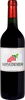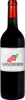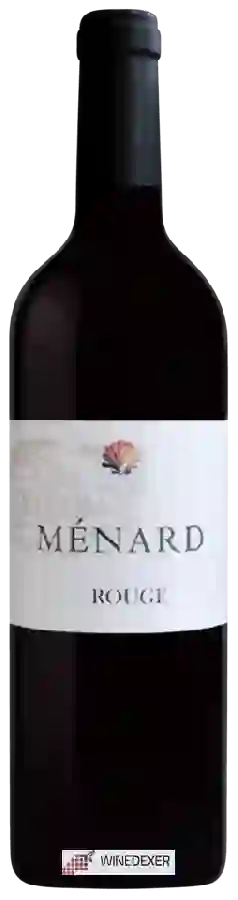
Domaine de MénardRouge
 Red wine



This wine generally goes well with beef and game (deer, venison).
The Rouge of the Domaine de Ménard is in the top 80 of wines of Côtes de Gascogne.

Food and wine pairings with Rouge
Pairings that work perfectly with Rouge


Original food and wine pairings with Rouge
The Rouge of Domaine de Ménard matches generally quite well with dishes of beef or game (deer, venison) such as recipes of roasted fillet of beef with parsley or duck casserole with turnips.
Details and technical informations about Domaine de Ménard's Rouge.
Discover the grape variety: Merlot
Round and fleshy reds with a velvety texture, showing aromas of ripe plum, black cherry, cocoa and truffle notes with age. Supple tannins, generous alcohol, indulgent finish. Pillar of Libournais (Pomerol with Pétrus, Saint-Émilion with Cheval Blanc and Ausone) and signature of Super Tuscans, Italian Wales and Washington State. A cross of Cabernet Franc × Magdeleine Noire, France's most planted red variety.
Last vintages of this wine
The best vintages of Rouge from Domaine de Ménard are 2017, 2018, 2016, 2014 and 2015.
Informations about the Domaine de Ménard
The Domaine de Ménard is one of of the world's greatest estates. It offers 43 wines for sale in the of Côtes de Gascogne to come and discover on site or to buy online.

The wine region of Côtes de Gascogne
Reference for accessible dry whites of the South-West: signature Colombard as white king — lively and aromatic with notes of lemon, grapefruit, mango, passion fruit, white flowers and a touch of green citrus, brisk acidity and moderate alcohol (9-11%) — a gourmet aperitif. Straight Ugni Blanc in the blend, more floral Sauvignon and rounder Gros Manseng as complements. A few honeyed sweet wines. Vast Gers IGP (Armagnac), oceanic climate, clay-limestone soils.
The wine region of Comté Tolosan
IGP covering all of southwest France across 12 departments, a broad and accessible palette. On the Garonne right bank, supple reds dominate: signature Merlot with signature notes of plum, ripe cherry, cocoa and a herbaceous touch, round tannins. Firm Cabernet, spicy Syrah, tannic local Tannat. Left bank for whites: vivid Colombard and Gros Manseng (citrus, grapefruit, exotic fruits), aromatic Sauvignon.
The word of the wine: Yeast
Micro-organisms at the base of all fermentative processes. A wide variety of yeasts live and thrive naturally in the vineyard, provided that treatments do not destroy them. Unfortunately, their replacement by laboratory-selected yeasts is often the order of the day and contributes to the standardization of the wine. Yeasts are indeed involved in the development of certain aromas.