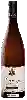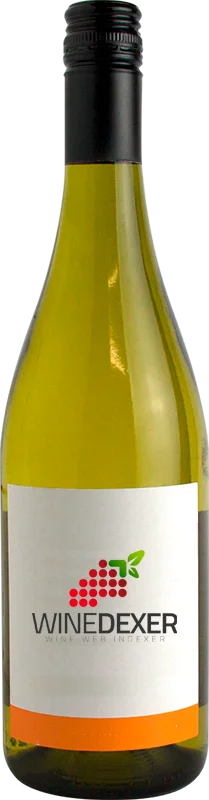
Winery MilleriouxClos Du Roy Sancerre
 White wine
In the mouth this white wine is a with a nice freshness.
This wine generally goes well with pork, vegetarian or shellfish.
Taste structure of the Clos Du Roy Sancerre from the Winery Millerioux
Light | Bold | |
Dry | Sweet | |
Soft | Acidic |
In the mouth the Clos Du Roy Sancerre of Winery Millerioux in the region of Loire Valley is a with a nice freshness.
Food and wine pairings with Clos Du Roy Sancerre
Pairings that work perfectly with Clos Du Roy Sancerre



Original food and wine pairings with Clos Du Roy Sancerre


The Clos Du Roy Sancerre of Winery Millerioux matches generally quite well with dishes of pork, shellfish or spicy food such as recipes of croziflette, sea sauerkraut with white wine or butter chicken or chicken makkhani (india).
Details and technical informations about Winery Millerioux's Clos Du Roy Sancerre.
Discover the grape variety: Molinera gorda
An ancient table grape of Spanish origin. Little known in France, it can still be found in Italy, Australia, the United States (California), Mexico where it is grown in pergolas, etc. It should not be confused with the molinara grown and known in Italy.
Informations about the Winery Millerioux
The Winery Millerioux is one of of the world's greatest estates. It offers 2 wines for sale in the of Loire Valley to come and discover on site or to buy online.

The wine region of Loire Valley
The Loire Valley is a key wine region in western France. It follows the course of the Loire River on its Long journey through the heart of France, from the inland hills of the Auvergne to the plains of the French Atlantic coast near Nantes (Muscadet country). Important in terms of quantity and quality, the region produces large quantities (about 4 million h/l each year) of everyday wines, as well as some of France's greatest wines. Diversity is another of the region's major assets; the styles of wine produced here range from the light, tangy Muscadet to the Sweet, honeyed Bonnezeaux, the Sparkling whites of Vouvray and the juicy, Tannic reds of Chinon and Saumur.
The word of the wine: Pedicel
Small stalk.