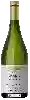
Winery Michel TorinoCuma Organic White Blend
 White wine


This wine generally goes well with
Details and technical informations about Winery Michel Torino's Cuma Organic White Blend.
Discover the grape variety: Crimson seedless
Cross between Emperor and C 133-199 obtained in the United States (California) by David Wilder Ramming and Ronald Tarailo and where it is cultivated since 1989. In California, it is today one of the most present varieties of table. It is also found in South America, South Africa, Spain, etc. - Synonymy: USDA selection C 102-26 (for all the synonyms of the varieties, click here!).
Last vintages of this wine
The best vintages of Cuma Organic White Blend from Winery Michel Torino are 2018, 0, 2019
Informations about the Winery Michel Torino
The Winery Michel Torino is one of of the world's great estates. It offers 69 wines for sale in the of Calchaqui Valley to come and discover on site or to buy online.

The wine region of Calchaqui Valley
Calchaqui Valleys is the most prolific wine region in Northern Argentina. It is also one of the highest anywhere in the world, with Vineyard altitudes ranging from 1500 to 3100 meters. As with other parts of the Country, Malbec is the key variety, supported by Cabernet Sauvignon and Torrontés. Merlot, Tannat, Cereza, Syrah, Bonarda and Moscatel (usually Muscat of Alexandria) are also grown.
The wine region of Salta
Salta, in the far North of Argentina, is home to some of the world's most extreme Vineyard sites. As is the case in Catamarca to the South and Jujuy to the northwest, Salta's vineyards are often located amid mountainous terrain with some reaching altitudes of just over 3,000 meters (9840ft) above sea level. The viticultural area is mainly concentrated to Cafayate of the Calchaqui Valley. Argentina's signature Grape varieties of Torrontes and Malbec are Salta's top performers, producing Bright, intensely flavored wines.
The word of the wine: Sparkling
Equivalent to effervescent, this term is used among others to designate the "natural sparkling wines" produced in the Montlouis appellation.