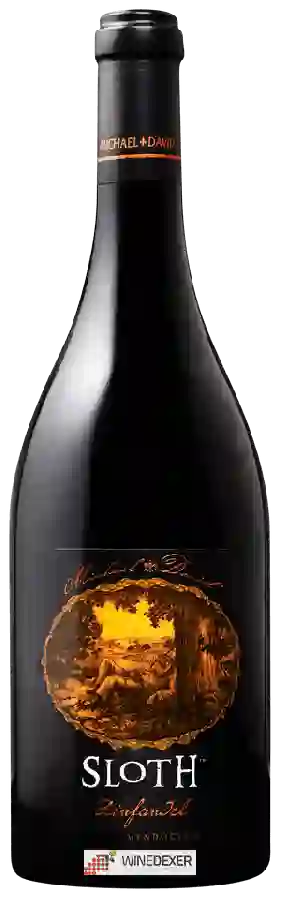
Michael David WinerySloth Zinfandel
 Red wine


This wine is composed of 100% of the grape variety Zinfandel.
In the mouth this red wine is a powerful.
This wine generally goes well with poultry, beef or lamb.

Taste structure of the Sloth Zinfandel from the Michael David Winery
Light | Bold | |
Smooth | Tannic | |
Dry | Sweet | |
Soft | Acidic |
In the mouth the Sloth Zinfandel of Michael David Winery in the region of California is a powerful.
Wine flavors and olphactive analysis




On the nose the Sloth Zinfandel of Michael David Winery in the region of California often reveals types of flavors of non oak, earth or microbio and sometimes also flavors of oak, spices or red fruit.
Food and wine pairings with Sloth Zinfandel
Pairings that work perfectly with Sloth Zinfandel



Original food and wine pairings with Sloth Zinfandel
The Sloth Zinfandel of Michael David Winery matches generally quite well with dishes of beef, lamb or poultry such as recipes of monkfish (anglerfish) à la sétoise, steamed lamb shoulder with cumin and coriander or chicken massala.
Details and technical informations about Michael David Winery's Sloth Zinfandel.
Discover the grape variety: Zinfandel
Generous, high-alcohol reds with a dark robe and indulgent palate, showing aromas of stewed blackberry, raspberry, black pepper, liquorice, cinnamon and cooked fruit. Also vinified as a popular sweet rosé (White Zinfandel). Star of California (Lodi, Sonoma, Dry Creek Valley, Paso Robles) with sought-after century-old vines. Identical to Italian Primitivo and Croatian Crljenak Kaštelanski by DNA analysis.
Last vintages of this wine

The best vintages of Sloth Zinfandel from Michael David Winery are 2010, 2013, 2012, 2017 and 2009.
Informations about the Michael David Winery
The Michael David Winery is one of of the world's greatest estates. It offers 79 wines for sale in the of Lodi to come and discover on site or to buy online.

The wine region of Lodi
Self-proclaimed world capital of Zinfandel (>40% of premium Californian production): old-vine red king (plantings from 1888) — opulent and jammy with notes of blackberry, plum, raspberry, pepper, liquorice and a tobacco touch, coated tannins. Cabernet, Syrah, Merlot, Tempranillo, Albariño, Barbera and Primitivo in the palette (>100 grapes). Viognier and Chardonnay in whites. Central Californian AVA (1986) east of the bay, Mediterranean climate tempered by the delta.
The wine region of California
Powerful, sunny reds: dense Napa Cabernet Sauvignon (blackcurrant, chocolate, tobacco, ample tannins), spicy, jammy Zinfandel from the Sierra Foothills, silky red-fruited Pinot Noir on the cool coast (Sonoma, Russian River, Central Coast). Opulent, buttery Chardonnay, notes of yellow fruit and vanilla. Varied climate, from the hot interior to the Pacific-cooled coast. 80% of US production, 139 AVAs including Napa (1st AVA, 1981).
The word of the wine: Tertiary aromas
Aromas resulting from the aging of the wine in the bottle. The aromas evolve with time, from fresh fruitiness to notes of stewed, candied or dried fruit, to aromas of venison or undergrowth.