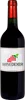
Winery Masia Vila-RasaQuarentons
 Red wine


In the mouth this red wine is a powerful with a nice balance between acidity and tannins.
This wine generally goes well with poultry, beef or veal.
Taste structure of the Quarentons from the Winery Masia Vila-Rasa
Light | Bold | |
Smooth | Tannic | |
Dry | Sweet | |
Soft | Acidic |
In the mouth the Quarentons of Winery Masia Vila-Rasa in the region of Catalogne is a powerful with a nice balance between acidity and tannins.
Food and wine pairings with Quarentons
Pairings that work perfectly with Quarentons



Original food and wine pairings with Quarentons

The Quarentons of Winery Masia Vila-Rasa matches generally quite well with dishes of beef, pasta or veal such as recipes of authentic bolognese sauce (ragù di carne), mami's macaroni and gruyere gratin or alsatian wine pie.
Details and technical informations about Winery Masia Vila-Rasa's Quarentons.
Discover the grape variety: Cabernet-Cortis
Interspecific cross between Cabernet Sauvignon and Solaris (Merzling x Geisenheim 6493 (Zarya Severa x Muscat Ottonel)) made in 1982 by Norbert Becker of the Freiburg Research Institute in Germany. It has the particularity of having only one gene for resistance to mildew and powdery mildew. It can be found in the Netherlands, Denmark, Belgium, Switzerland, etc., but is still little known in France. Note that Cabernet-Carol has the same parents.
Last vintages of this wine
The best vintages of Quarentons from Winery Masia Vila-Rasa are 0, 2017
Informations about the Winery Masia Vila-Rasa
The Winery Masia Vila-Rasa is one of of the world's greatest estates. It offers 5 wines for sale in the of Catalogne to come and discover on site or to buy online.

The wine region of Catalogne
Catalonia (Catalunya in Catalan and Cataluña in Spanish) is an autonomous community in the Northeast of Spain. It extends from the historic county (comarca) of Montsia in the South to the border with France in the north. The Mediterranean Sea forms its eastern border and offers 580 km of coastline. The Catalunya D.
The word of the wine: Bâtonnage
A very old technique that has come back into fashion in modern oenology, which consists of shaking the white wine in the barrels at the end of fermentation, or after fermentation, with a stick or a flail, in order to suspend the fine lees composed of yeasts at the end of their activity. This process is sometimes used for red wines.