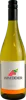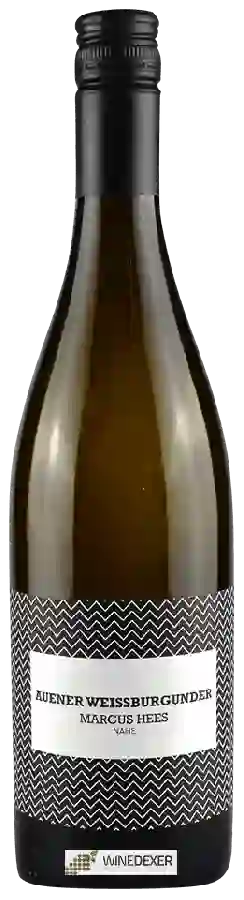
Winery Marcus HeesAuener Weissburgunder
 White wine



In the mouth this white wine is a with a nice freshness.
This wine generally goes well with rich fish (salmon, tuna etc), shellfish or mild and soft cheese.
Taste structure of the Auener Weissburgunder from the Winery Marcus Hees
Light | Bold | |
Dry | Sweet | |
Soft | Acidic |
In the mouth the Auener Weissburgunder of Winery Marcus Hees in the region of Nahe is a with a nice freshness.
Food and wine pairings with Auener Weissburgunder
Pairings that work perfectly with Auener Weissburgunder



Original food and wine pairings with Auener Weissburgunder

The Auener Weissburgunder of Winery Marcus Hees matches generally quite well with dishes of rich fish (salmon, tuna etc), shellfish or mild and soft cheese such as recipes of pasta with tuna and tomato sauce, seafood, chorizo and chicken paella from patou or 4 seasons pizza my way.
Details and technical informations about Winery Marcus Hees's Auener Weissburgunder.
Discover the grape variety: Sylvaner
The sylvaner is grown mainly in Germany and Alsace. The buds are somewhat cottony and the young leaves are green. The same applies to the ribbed branches. Once mature, the dominant colour is golden-green and small elliptical berries with small to medium-sized bunches can be seen. The ripe fruit is then adorned by five-lobed leaves. This variety is susceptible to chlorosis, gray mold, powdery mildew and mildew. It is also sensitive to frost and wind because of its long branches. It can be grown in any kind of soil, although it prefers stony, sandy and light soils. It is indeed moderately acidic and offers a complex set of aromas such as bitter almond, fruity and floral background. The taste has an excellent mixture of honey and candied or dried fruits.
Last vintages of this wine
The best vintages of Auener Weissburgunder from Winery Marcus Hees are 2015, 0, 2018
Informations about the Winery Marcus Hees
The Winery Marcus Hees is one of of the world's greatest estates. It offers 18 wines for sale in the of Nahe to come and discover on site or to buy online.

The wine region of Nahe
Nahe is one of the smaller German wine regions, named after the Nahe river which joins the Rhein at Rheinhessen/bingen">Bingen. The viticultural carea here is characterised by dramatic topography with steep slopes and craggy outcrops of metamorphic rock. Like most of the regions on or near the Rhine, its most prestigious wines are made from Riesling. There are around 4,000 hectares (10,000 acres) of Vineyards, spread across seven Grosslagen (wine districts) and over 300 Einzellagen (individual vineyard sites).
The word of the wine: Vegetative cycle
All the different phases of the vine's development: winter rest period, budburst, inflorescence, flowering, fruit set, veraison, ripening.