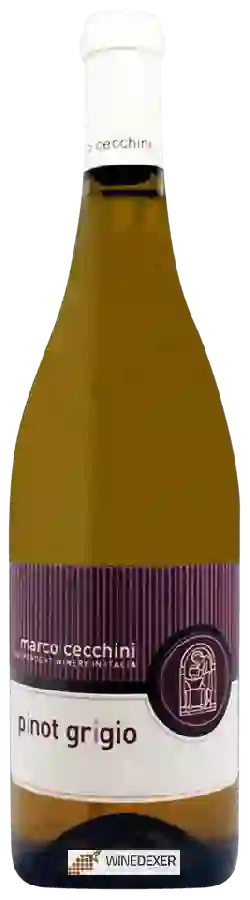
Winery Marco CecchiniPinot Grigio
 White wine


In the mouth this white wine is a .
This wine generally goes well with vegetarian, shellfish or mushrooms.

Taste structure of the Pinot Grigio from the Winery Marco Cecchini
Light | Bold | |
Dry | Sweet | |
Soft | Acidic |
In the mouth the Pinot Grigio of Winery Marco Cecchini in the region of Friuli-Venezia Giulia is a .
Food and wine pairings with Pinot Grigio
Pairings that work perfectly with Pinot Grigio


Original food and wine pairings with Pinot Grigio

The Pinot Grigio of Winery Marco Cecchini matches generally quite well with dishes of shellfish, vegetarian or mushrooms such as recipes of monkfish tail with coconut milk and curry, summer tuna quiche or vegetarian paella.
Details and technical informations about Winery Marco Cecchini's Pinot Grigio.
Discover the grape variety: Pineau d'Aunis
Light, spicy reds with a clear ruby robe, fine tannins and fresh acidity, with characteristic aromas of black pepper, red fruit (raspberry, redcurrant), spice and herbal notes. Airy, refreshing palate with a signature peppery finish. Also made as very expressive, taut rosés. Star of Coteaux du Vendômois AOC, present in Anjou, Touraine and Coteaux du Loir AOC. Autochthonous Loire Valley variety, present since the 12th century (favourite wine of Henry Plantagenet).
Last vintages of this wine
The best vintages of Pinot Grigio from Winery Marco Cecchini are 2011, 2014, 0
Informations about the Winery Marco Cecchini
The Winery Marco Cecchini is one of of the world's greatest estates. It offers 12 wines for sale in the of Friuli-Venezia Giulia to come and discover on site or to buy online.

The wine region of Friuli-Venezia Giulia
Italian benchmark of great whites of elegance and minerality. Emblematic Friulano with notes of fresh almond, pear and white flowers, taut Ribolla Gialla, precise Pinot Grigio, lively Sauvignon and balanced Chardonnay. Rare sweet Picolit (DOCG), saline Malvasia Istriana. Rising reds: fruity spicy Refosco, more tannic Pignolo and Schioppettino.
The word of the wine: Sweet
Wine with a slightly sickening sweetness.





