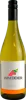
Winery MaraleSauvignon Blanc
 White wine



In the mouth this white wine is a with a nice freshness.
This wine generally goes well with vegetarian, shellfish or goat cheese.
Taste structure of the Sauvignon Blanc from the Winery Marale
Light | Bold | |
Dry | Sweet | |
Soft | Acidic |
In the mouth the Sauvignon Blanc of Winery Marale in the region of San Juan is a with a nice freshness.
Food and wine pairings with Sauvignon Blanc
Pairings that work perfectly with Sauvignon Blanc


Original food and wine pairings with Sauvignon Blanc
The Sauvignon Blanc of Winery Marale matches generally quite well with dishes of shellfish, vegetarian or goat cheese such as recipes of curried mouclade à la charentaise, light tuna-tomato quiche (without cream) or goat cheese and tomato cake.
Details and technical informations about Winery Marale's Sauvignon Blanc.
Discover the grape variety: Superior seedless
This variety was obtained in 1972 in the United States by Superior Farming Co. by crossing the cardinal with an unnamed apyrene variety. Superior seedless is present in Italy (Puglia), Spain, Morocco, Argentina and the United States (California, etc.).
Last vintages of this wine
The best vintages of Sauvignon Blanc from Winery Marale are 0, 2017
Informations about the Winery Marale
The Winery Marale is one of of the world's greatest estates. It offers 16 wines for sale in the of San Juan to come and discover on site or to buy online.

The wine region of San Juan
San Juan is an important Argentinean wine-producing area, producing wines of increasing quality using traditional European Grape varieties. The wine region of San Juan covers the administrative area of the same name in the north-western corner of Argentina. The province sits between Mendoza and La Rioja, and is almost entirely contained within the mountainous foothills of the Andes. In terms of production Volume, San Juan is Argentina's second-largest wine region after Mendoza.
The word of the wine: Aging on lees
Maturing on the lees enhances the stability, aromatic complexity and texture of white wines, which gain in body and volume. This phenomenon is induced by autolysis, the process of self-degradation of the lees.