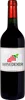
Winery ManifiestoPablo Calatayud
 Red wine



In the mouth this red wine is a powerful.
This wine generally goes well with poultry, beef or veal.
Taste structure of the Pablo Calatayud from the Winery Manifiesto
Light | Bold | |
Smooth | Tannic | |
Dry | Sweet | |
Soft | Acidic |
In the mouth the Pablo Calatayud of Winery Manifiesto in the region of Valence is a powerful.
Wine flavors and olphactive analysis

Food and wine pairings with Pablo Calatayud
Pairings that work perfectly with Pablo Calatayud



Original food and wine pairings with Pablo Calatayud

The Pablo Calatayud of Winery Manifiesto matches generally quite well with dishes of beef, pasta or veal such as recipes of wild boar stew in burgundy style, salmon and spinach lasagna or caramelized lamb mice.
Details and technical informations about Winery Manifiesto's Pablo Calatayud.
Discover the grape variety: Planta nova
A very old indigenous grape variety that has been cultivated for a very long time in Spain, more precisely in the western region of Valencia, where it is practically no longer multiplied today. It is said to be the result of a natural cross between the heftakilo and the rojal tinta, which are both black varieties. Planta nova can still be found in Portugal, Argentina, South Africa, ... almost unknown in France. A long time ago it was also harvested as a table grape, which is no longer the case today.
Last vintages of this wine
The best vintages of Pablo Calatayud from Winery Manifiesto are 2012, 0, 2013
Informations about the Winery Manifiesto
The Winery Manifiesto is one of of the world's greatest estates. It offers 9 wines for sale in the of Valence to come and discover on site or to buy online.

The wine region of Valence
Valencia is a province in the centre of Spain's sunny east coast, perhaps better known for its oranges (and paella) than its wine. The administrative Center of Valencia is the city of the same name, the third largest in Spain and the largest port on the Mediterranean. Archaeological evidence suggests that wine making in Valencia dates back more than a thousand years, but the region has never been particularly prominent on the world wine map. In modern times, Valencia's wine production has focused on quantity rather than quality, although this is gradually changing.
The word of the wine: Chartreuse
In the Bordeaux region, small castle from the 18th or early 19th century.