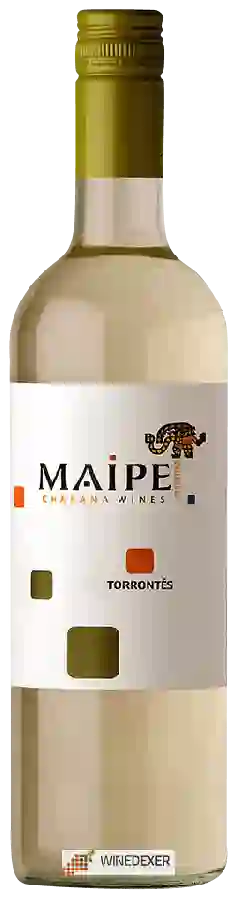
Winery MaipeTorrontés
 White wine


This wine generally goes well with pork, rich fish (salmon, tuna etc) or cured meat.
Wine flavors and olphactive analysis





On the nose the Torrontés of Winery Maipe in the region of Mendoza often reveals types of flavors of non oak, earth or vegetal and sometimes also flavors of tree fruit, citrus fruit or floral.
Food and wine pairings with Torrontés
Pairings that work perfectly with Torrontés



Original food and wine pairings with Torrontés

The Torrontés of Winery Maipe matches generally quite well with dishes of pork, rich fish (salmon, tuna etc) or spicy food such as recipes of melt-in-the-mouth pork tenderloin casserole, salmon lasagna or spaghetti all 'amatriciana.
Details and technical informations about Winery Maipe's Torrontés.
Discover the grape variety: Verdanel
The Verdanel grape variety is particularly cultivated in the southwestern region of Gaillac, in the Tarn department. This very old white grape variety does not fear either the cold or the heat. Today, it is very rare and almost extinct. The Verdanel is not classified in the Appellations of Controlled Origin. The Verdanel has serrated leaves, almost whole and of a tender green colour. Its conical bunches are filled with medium-sized, slightly ellipsoid fruits. When the berries reach maturity, their greenish-white color turns to golden white. A dry white wine with a low alcohol content is produced from this variety. It also has a low acidity level. This wine goes well with spicy dishes as well as lobster or red mullet.
Last vintages of this wine

The best vintages of Torrontés from Winery Maipe are 2015, 2014, 2012, 2018 and 2016.
Informations about the Winery Maipe
The Winery Maipe is one of of the world's greatest estates. It offers 15 wines for sale in the of Mendoza to come and discover on site or to buy online.

The wine region of Mendoza
Mendoza is by far the largest wine region in Argentina. Located on a high-altitude plateau at the edge of the Andes Mountains, the province is responsible for roughly 70 percent of the country's annual wine production. The French Grape variety Malbec has its New World home in the vineyards of Mendoza, producing red wines of great concentration and intensity. The province Lies on the western edge of Argentina, across the Andes Mountains from Chile.
The word of the wine: Gravelle
Term designating the deposit of tartar crystals in bottled white wines.