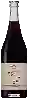
Winery MagulaModrý Portugal Barrique
 Red wine



This wine generally goes well with


Details and technical informations about Winery Magula's Modrý Portugal Barrique.
Discover the grape variety: Cornichon blanc
A very old variety that has been multiplied in many Mediterranean wine-producing countries, due to the fact that its grapes ripen quite late. It is only in Italy and Greece that it still occupies a significant area. In France, it is only found among amateur gardeners and/or collectors. By its foliage in particular, the white gherkin is different from the purple gherkin this last one is given as very little sensitive to the grey rot.
Last vintages of this wine
The best vintages of Modrý Portugal Barrique from Winery Magula are 0
Informations about the Winery Magula
The Winery Magula is one of of the world's great estates. It offers 15 wines for sale in the of Slovakia to come and discover on site or to buy online.

The wine region of Slovakia
Slovakia (officially The Slovak Republic) is a landlocked country described as being either at the eastern edge of Western Europe, or the western edge of Eastern Europe. This dichotomy reflects the state's recent history, a story of political unrest common in this region. The lands that are now Slovakia were an integral Part of Hungary for almost 900 years, but became independent when the Austro-Hungarian Empire was dismantled after the First World War. Almost immediately, Slovakia aligned itself with Bohemia and Moravia (the modern-day Czech Republic), Silesia and Carpathian Ruthenia to form Czechoslovakia.
The word of the wine: Primeur
Said of wines from the last vintage and, by extension, wines of the year, fruity and easy-drinking, put on sale on the third Thursday in November. The AOC regulations specify that a wine is said to be primeur if it is bottled before the spring, and nouveau if it is bottled before the following harvest. Beaujolais Nouveau is therefore a vin primeur.