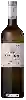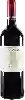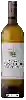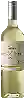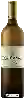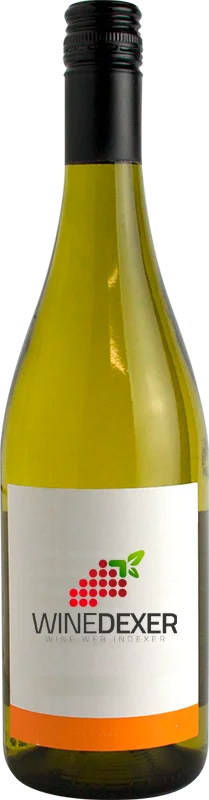
Château MagensGraves Blanc
 White wine
This wine generally goes well with pork, vegetarian or poultry.
Food and wine pairings with Graves Blanc
Pairings that work perfectly with Graves Blanc



Original food and wine pairings with Graves Blanc


The Graves Blanc of Château Magens matches generally quite well with dishes of pork, vegetarian or poultry such as recipes of roast pork with prunes, mushroom, bacon and gruyere quiche or grandma's chicken casserole.
Details and technical informations about Château Magens's Graves Blanc.
Discover the grape variety: Goron de Bovernier
Its origin is most certainly Valdôtaine (Italy), still cultivated in the Entremont Valley in the Swiss Valais and totally unknown in other countries. It is the result of a natural cross between a still unknown or even extinct variety and the Cornalin du Valais or rouge du pays. It is the grandson of the humagne rouge or petit rouge and would also have genetic links with the rèze and the chasselas. The Goron de Bovernier is registered in the Official Catalogue of wine grape varieties list B.
Informations about the Château Magens
The Château Magens is one of wineries to follow in Graves.. It offers 1 wines for sale in the of Graves to come and discover on site or to buy online.

The wine region of Graves
Graves is a wine region on the left bank of the Bordeaux region of France, characterized by the gravel soils that give it its name. Unique among the sub-regions of Bordeaux, Graves is equally respected for its red and white wines. The AOC Graves, which covers both red and white wines, is the catch-all appellation of the district. A typical Graves red is based on the classic Bordeaux grapes, Cabernet Sauvignon and Merlot, with Cabernet Franc, Malbec and Petit Verdot sometimes in a supporting role.
The wine region of Bordeaux
Bordeaux, in southwestern France, is one of the most famous, prestigious and prolific wine regions in the world. The majority of Bordeaux wines (nearly 90% of the production Volume) are the Dry, medium and Full-bodied red Bordeaux blends for which it is famous. The finest (and most expensive) are the wines of the great châteaux of Haut-Médoc and the right bank appellations of Saint-Émilion and Pomerol. The former focuses (at the highest level) on Cabernet Sauvignon, the latter on Merlot.
The word of the wine: Oenologist
Specialist in wine-making techniques. It is a profession and not a passion: one can be an oenophile without being an oenologist (and the opposite too!). Formerly attached to the Faculty of Pharmacy, oenology studies have become independent and have their own university course. Learning to make wine requires a good chemical background but also, increasingly, a good knowledge of the plant. Some oenologists work in laboratories (analysis). Others, the consulting oenologists, work directly in the properties.