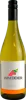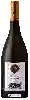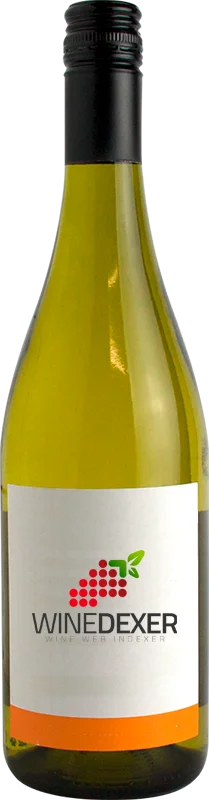
Winery Mad ChiefSauvignon Blanc
 White wine


In the mouth this white wine is a with a nice freshness.
This wine generally goes well with vegetarian, shellfish or goat cheese.
Taste structure of the Sauvignon Blanc from the Winery Mad Chief
Light | Bold | |
Dry | Sweet | |
Soft | Acidic |
In the mouth the Sauvignon Blanc of Winery Mad Chief in the region of Central Valley is a with a nice freshness.
Food and wine pairings with Sauvignon Blanc
Pairings that work perfectly with Sauvignon Blanc



Original food and wine pairings with Sauvignon Blanc
The Sauvignon Blanc of Winery Mad Chief matches generally quite well with dishes of shellfish, vegetarian or goat cheese such as recipes of tagliatelle with scallops, vegan leek and tofu quiche or goat's cheese and sun-dried tomato tart with cured ham.
Details and technical informations about Winery Mad Chief's Sauvignon Blanc.
Discover the grape variety: Muscat de Roussé
Intraspecific cross between Hamburg Muscat and Cardinal, obtained in 1973 at the Roussé viticultural station (Bulgaria).
Last vintages of this wine
The best vintages of Sauvignon Blanc from Winery Mad Chief are 2019, 0
Informations about the Winery Mad Chief
The Winery Mad Chief is one of of the world's greatest estates. It offers 6 wines for sale in the of Central Valley to come and discover on site or to buy online.

The wine region of Central Valley
The Central Valley (El Valle Central) of Chile is one of the most important wine-producing areas in South America in terms of Volume. It is also one of the largest wine regions, stretching from the Maipo Valley (just south of Santiago) to the southern end of the Maule Valley. This is a distance of almost 250 miles (400km) and covers a number of Climate types. The Central Valley wine region is easily (and often) confused with the geological Central Valley, which runs north–south for more than 620 miles (1000km) between the Pacific Coastal Ranges and the lower Andes.
The word of the wine: Cinsault
Cinsault is a southern black grape variety that can be found in the blends of most Mediterranean appellations, but most often as an accessory grape variety. It is undoubtedly most present in certain rosé wines (in Corbières, Côtes-de-Provence, etc.): it gives these wines highly appreciated aromas of strawberry, peach and raspberry. In vin de pays (IGP), it is often vinified on its own, usually as a rosé.