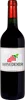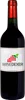
Winery MachetLes Haies Bourgueil
 Red wine
This wine generally goes well with
Details and technical informations about Winery Machet's Les Haies Bourgueil.
Discover the grape variety: Ravat blanc
Interspecific crossing between Seibel 5474 (Seibel 405 x Seibel 867) and Chardonnay by Jean-François Ravat. After 1945, it was already considered a quality grape variety, and is now listed in the Official Catalogue of Vine Varieties, list A1.
Informations about the Winery Machet
The Winery Machet is one of of the world's greatest estates. It offers 6 wines for sale in the of Bourgueil to come and discover on site or to buy online.

The wine region of Bourgueil
The wine region of Bourgueil is located in the region of Touraine of Loire Valley of France. Wineries and vineyards like the Domaine du Bel Air or the Domaine de la Chevalerie produce mainly wines red, pink and white. The most planted grape varieties in the region of Bourgueil are Cabernet franc, Cabernet-Sauvignon and Pinot noir, they are then used in wines in blends or as a single variety. On the nose of Bourgueil often reveals types of flavors of red fruit, toasty or red currant and sometimes also flavors of cocoa, green bell pepper or tropical fruit.
The wine region of Loire Valley
The Loire Valley is a key wine region in western France. It follows the course of the Loire River on its Long journey through the heart of France, from the inland hills of the Auvergne to the plains of the French Atlantic coast near Nantes (Muscadet country). Important in terms of quantity and quality, the region produces large quantities (about 4 million h/l each year) of everyday wines, as well as some of France's greatest wines. Diversity is another of the region's major assets; the styles of wine produced here range from the light, tangy Muscadet to the Sweet, honeyed Bonnezeaux, the Sparkling whites of Vouvray and the juicy, Tannic reds of Chinon and Saumur.
The word of the wine: Oenologist
Specialist in wine-making techniques. It is a profession and not a passion: one can be an oenophile without being an oenologist (and the opposite too!). Formerly attached to the Faculty of Pharmacy, oenology studies have become independent and have their own university course. Learning to make wine requires a good chemical background but also, increasingly, a good knowledge of the plant. Some oenologists work in laboratories (analysis). Others, the consulting oenologists, work directly in the properties.