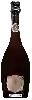
Winery MabandaCava Brut Rosé
 Sparkling wine


In the mouth this sparkling wine is a with a nice vivacity and a fine and pleasant bubble.
This wine generally goes well with appetizers and snacks, lean fish or shellfish.

Taste structure of the Cava Brut Rosé from the Winery Mabanda
Light | Bold | |
Soft | Acidic | |
Gentle | Fizzy |
In the mouth the Cava Brut Rosé of Winery Mabanda in the region of Cava is a with a nice vivacity and a fine and pleasant bubble.
Food and wine pairings with Cava Brut Rosé
Pairings that work perfectly with Cava Brut Rosé



Original food and wine pairings with Cava Brut Rosé


The Cava Brut Rosé of Winery Mabanda matches generally quite well with dishes of shellfish, appetizers and snacks or lean fish such as recipes of pasta with shrimp, lili's gressins or chinese style fish.
Details and technical informations about Winery Mabanda's Cava Brut Rosé.
Discover the grape variety: Piquepoul
Languedoc family with very high acidity, aromatic signature of southern France. Piquepoul Blanc gives lively, saline whites (Picpoul de Pinet AOC) with notes of citrus, white flowers and marine iodine, ideal with oysters. Piquepoul Noir gives fruity, fresh reds, one of the thirteen authorised varieties at Châteauneuf-du-Pape. French autochthonous variety from Languedoc, in white, black and grey versions.
Last vintages of this wine
The best vintages of Cava Brut Rosé from Winery Mabanda are 2019, 0
Informations about the Winery Mabanda
The Winery Mabanda is one of of the world's greatest estates. It offers 4 wines for sale in the of Cava to come and discover on site or to buy online.

The wine region of Cava
Spain's star traditional-method sparkler, the Iberian equivalent of Champagne. Three Catalan grapes blended: Macabeo (apple, freshness), Xarel-lo (body and herbaceous notes), Parellada (elegance and floral finesse). Chardonnay and Pinot Noir also allowed. From fruit-driven Brut to Gran Reserva (30 months on lees) with brioche and toasted notes.
The word of the wine: Sirupy
Close to the sensation of unctuousness, said of a wine that gives the impression of having the consistency of a syrup.