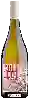
Winery Hacienda La LomitaChardonnay
 wine
wine
This wine generally goes well with
The Chardonnay of the Winery Hacienda La Lomita is in the top 0 of wines of Valle de Guadalupe.
Details and technical informations about Winery Hacienda La Lomita's Chardonnay.
Discover the grape variety: Aligoté
Aligoté is an ancient Burgundian grape variety (it has different names depending on the region in which it is grown: griset blanc in Beaune, giboudot blanc in the Chalonnais or troyen blanc in the Aube), mainly used in the production of Bourgogne-Aligoté, Bouzeron and Crémant-de-Bourgogne.aligoté is a medium-fine white grape variety, quite productive, which gives clear, acidic, fresh and light white wines. An anecdote often says that it was a member of the clergy named Kir who gave it its letters of nobility by adding it to blackcurrant cream to prepare an aperitif.produced on more than 1,600 hectares in Burgundy, aligoté has also been exported. It is also cultivated in Eastern Europe (Ukraine, Romania), California, Canada and Chile, representing more than 20,000 hectares in the world.
Last vintages of this wine



The best vintages of Chardonnay from Winery Hacienda La Lomita are 2019, 0
Informations about the Winery Hacienda La Lomita
The Winery Hacienda La Lomita is one of of the world's great estates. It offers 12 wines for sale in the of Valle de Guadalupe to come and discover on site or to buy online.

The wine region of Valle de Guadalupe
The wine region of Valle de Guadalupe is located in the region of Baja California of North of Mexico. We currently count 230 estates and châteaux in the of Valle de Guadalupe, producing 891 different wines in conventional, organic and biodynamic agriculture. The wines of Valle de Guadalupe go well with generally quite well with dishes .
The wine region of North
Valle de Guadalupe is the key wine region in the state of Baja California, Mexico. Baja California, in turn, is responsible for 90 percent national wine production. At the heart of the valley is Guadalupe Village, which Lies 14 miles (20km) North of Ensenada city. The valley runs northeast to southwest on either side of Guadalupe, stretching from the Pacific coast inland for roughly 20 miles (32 km).
The word of the wine: Old
This term can have several meanings, but generally refers to a wine that is several years old and has been aged in the bottle after having been in the barrel.