The Winery Lissom Vieilles Vignes of Central Valley of California
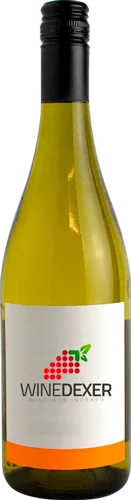
Winery Lissom Vieilles Vignes
The winery offers 8 different wines
3.3


Note - 1Note - 1Note - 1Note - 0Note - 0
Its wines get an average rating of 3.3.
It is currently not ranked among the best domains of California.
It is located in Central Valley in the region of California

The Winery Lissom Vieilles Vignes is one of the best wineries to follow in Central Valley.. It offers 8 wines for sale in of Central Valley to come and discover on site or to buy online.
Top Winery Lissom Vieilles Vignes wines

Looking for the best Winery Lissom Vieilles Vignes wines in Central Valley among all the wines in the region? Check out our tops of the best red, white or effervescent Winery Lissom Vieilles Vignes wines. Also find some food and wine pairings that may be suitable with the wines from this area. Learn more about the region and the Winery Lissom Vieilles Vignes wines with technical and enological descriptions.

The top white wines of Winery Lissom Vieilles Vignes

Food and wine pairings with a white wine of Winery Lissom Vieilles Vignes

How Winery Lissom Vieilles Vignes wines pair with each other generally quite well with dishes of pasta, rich fish (salmon, tuna etc) or shellfish such as recipes of seafood lasagna, tuna and goat cheese pie or shrimp with garlic and orange.

The grape varieties most used in the white wines of Winery Lissom Vieilles Vignes.

  • Chardonnay

Discovering the wine region of Central Valley

The wine region of Central Valley is located in the region of California of United States. Wineries and vineyards like the Domaine Delta Block or the Domaine Terra Andina produce mainly wines red and white. The most planted grape varieties in the region of Central Valley are Cabernet-Sauvignon, Zinfandel and Carmenère, they are then used in wines in blends or as a single variety. On the nose of Central Valley often reveals types of flavors of cherry, strawberries or vanilla and sometimes also flavors of non oak, earth or oak.

In the mouth of Central Valley is a powerful with a nice balance between acidity and tannins. We currently count 17 estates and châteaux in the of Central Valley, producing 24 different wines in conventional, organic and biodynamic agriculture. The wines of Central Valley go well with generally quite well with dishes of beef, lamb or poultry.

The top red wines of Winery Lissom Vieilles Vignes

Food and wine pairings with a red wine of Winery Lissom Vieilles Vignes

How Winery Lissom Vieilles Vignes wines pair with each other generally quite well with dishes such as recipes .

Discover the grape variety: Chardonnay

The white Chardonnay is a grape variety that originated in France (Burgundy). It produces a variety of grape specially used for wine making. It is rare to find this grape to eat on our tables. This variety of grape is characterized by small bunches, and small grapes. White Chardonnay can be found in many vineyards: South West, Burgundy, Jura, Languedoc & Roussillon, Cognac, Bordeaux, Beaujolais, Savoie & Bugey, Loire Valley, Champagne, Rhone Valley, Armagnac, Lorraine, Alsace, Provence & Corsica.

Discover other wineries and winemakers neighboring the Winery Lissom Vieilles Vignes

Planning a wine route in the of Central Valley? Here are the wineries to visit and the winemakers to meet during your trip in search of wines similar to Winery Lissom Vieilles Vignes.

Discover the grape variety: Saint-Pierre doré

Belonging to the Estaing wines, the Saint Pierre doré is also called Roussellou. With an average budding, this variety is presented in the form of full, winged, elongated and very large bunches, with pulpy, spherical and medium-sized berries. When ripe, the fruit is golden-white in colour, with bronze leaves, which may be three-lobed or whole. The red colour is also found on the internodes of its herbaceous branch. For best results, a fairly long pruning will suit the Saint Pierre Doré, which is not overly afraid of oidium or mildew, but more afraid of grey rot. The characteristics of the roussellou mean that it could play a major role in the production of sparkling wines. The vine does indeed give a very acidic taste, not very sweet and with low degree aromas. It has been noted that the extent of the vineyard recorded in 1958 is 123 Ha, to be reduced to 1 Ha in 1994 on the French territory.