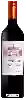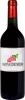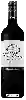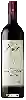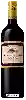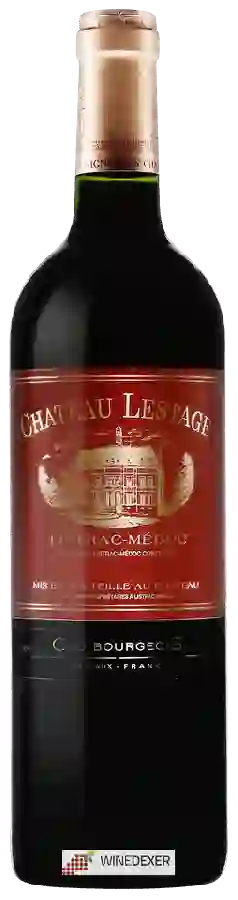
Château LestageListrac-Médoc
 Red wine



This wine is a blend of 3 varietals which are the Cabernet-Sauvignon, the Petit Verdot and the Merlot.
This wine generally goes well with poultry, beef or game (deer, venison).
The Listrac-Médoc of the Château Lestage is in the top 40 of wines of Listrac-Médoc.

Food and wine pairings with Listrac-Médoc
Pairings that work perfectly with Listrac-Médoc



Original food and wine pairings with Listrac-Médoc

The Listrac-Médoc of Château Lestage matches generally quite well with dishes of beef, poultry or game (deer, venison) such as recipes of german recipe for marinated meat: sauerbraten, magic cake cheese quiche or duck breast in a crust.
Details and technical informations about Château Lestage's Listrac-Médoc.
Discover the grape variety: Cabernet-Sauvignon
Structured, tannic reds, deeply coloured, with aromas of blackcurrant, blackberry, cedar, tobacco and graphite, underpinned by firm acidity and fine ageing potential. Cornerstone of the great Médoc estates (Pauillac, Saint-Estèphe, Saint-Julien) and signature of Napa Valley, Coonawarra and Maipo. The world's most planted red variety, a natural cross of Cabernet Franc x Sauvignon Blanc born in Bordeaux.
Last vintages of this wine
The best vintages of Listrac-Médoc from Château Lestage are 2021, 1997, 2019, 2015 and 2018.
Informations about the Château Lestage
The Château Lestage is one of of the world's greatest estates. It offers 7 wines for sale in the of Listrac-Médoc to come and discover on site or to buy online.

The wine region of Listrac-Médoc
Communal AOC of the Médoc (peninsula, Quaternary gravel ridges): Cabernet Sauvignon (power, structure) with Merlot (fruit, roundness), Petit Verdot (spices, colour) and Cabernet Franc (finesse) — structured profile of black fruits (blackcurrant, blackberry), spicy and oaky notes, structured tannins and long ageing. Pyrenean-Massif Central erosion gravels on Landes sands, draining limestone and clays.
The wine region of Bordeaux
World-renowned age-worthy reds, led by round Merlot (plum, black fruit) or firm Cabernet Sauvignon (blackcurrant, cedar, graphite), blended with Cabernet Franc and Petit Verdot for tannic structure. Structured Médoc and Graves, velvety Saint-Émilion and Pomerol. Also crisp dry whites (Sauvignon/Sémillon) and opulent sweet Sauternes with honey and candied fruit. A 110,000 ha Gironde vineyard, 65 appellations, cradle of the 1855 classified growths.
The word of the wine: Vinification of sweet wines
Moelleux and liquoreux wines are characterized by the presence of residual sugars (natural sugar of the grape), not transformed into alcohol under the effect of yeasts. The fermentation is stopped by cold and by the addition of sulphur dioxide (sulphur).