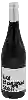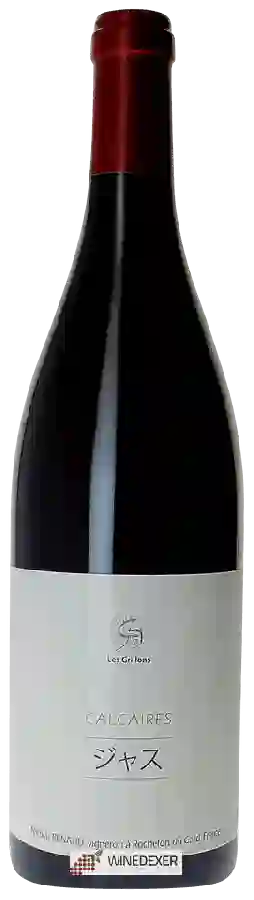
Le Clos des GrillonsCalcaires
 Red wine


This wine generally goes well with beef and mature and hard cheese.

Wine flavors and olphactive analysis


On the nose the Calcaires of Le Clos des Grillons in the region of Vin de France often reveals types of flavors of strawberries, raspberry or spices and sometimes also flavors of red fruit, black fruit.
Food and wine pairings with Calcaires
Pairings that work perfectly with Calcaires


Original food and wine pairings with Calcaires
The Calcaires of Le Clos des Grillons matches generally quite well with dishes of beef or mature and hard cheese such as recipes of tournedos with foie gras or endive salad with walnuts, comté cheese and bacon.
Details and technical informations about Le Clos des Grillons's Calcaires.
Discover the grape variety: Picolit noir
Light, fruity reds with a clear ruby colour, silky tannins and an airy palate, with aromas of red fruits (cherry, raspberry) and delicate floral notes. Discreet Friulian profile. Very rare, preserved for its heritage value, this dark-skinned mutation of the white Picolit survives in a few heritage plots in Friuli. An ancient north-east Italian variety.
Last vintages of this wine

The best vintages of Calcaires from Le Clos des Grillons are 2019, 2017, 2018, 2016
Informations about the Le Clos des Grillons
The Le Clos des Grillons is one of of the world's greatest estates. It offers 26 wines for sale in the of Vin de France to come and discover on site or to buy online.

The wine region of Vin de France
The freest category of French wine, the playground of winemakers working outside the AOC. All styles combined: fruity reds, lively or ambitious whites, everyday rosés, unusual blends, natural wines, atypical grapes (Petit Manseng in Languedoc, Riesling in Provence), experimental winemaking (skin-contact whites, no sulphur). Grape and vintage labelling allowed, no geographic constraint. From the pop, convivial cuvée to the artisan gem: freedom in a bottle.
The word of the wine: Mistelle
Unfermented must with added brandy, also called liqueur wine: Pineau des Charentes, Floc de Gascogne, Macvin du Jura, Ratafia, Cartagène du Languedoc.