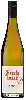
Winery LandgrafGrauburgunder Trocken
 White wine



In the mouth this white wine is a .
This wine generally goes well with pork, cured meat or mushrooms.
Taste structure of the Grauburgunder Trocken from the Winery Landgraf
Light | Bold | |
Dry | Sweet | |
Soft | Acidic |
In the mouth the Grauburgunder Trocken of Winery Landgraf in the region of Rheinhessen is a .
Food and wine pairings with Grauburgunder Trocken
Pairings that work perfectly with Grauburgunder Trocken


Original food and wine pairings with Grauburgunder Trocken

The Grauburgunder Trocken of Winery Landgraf matches generally quite well with dishes of pork, spicy food or mushrooms such as recipes of ham with leek fondue, traditional hungarian goulash or wild boar bourguignon.
Details and technical informations about Winery Landgraf's Grauburgunder Trocken.
Discover the grape variety: Ravat blanc
Interspecific crossing between Seibel 5474 (Seibel 405 x Seibel 867) and Chardonnay by Jean-François Ravat. After 1945, it was already considered a quality grape variety, and is now listed in the Official Catalogue of Vine Varieties, list A1.
Last vintages of this wine
The best vintages of Grauburgunder Trocken from Winery Landgraf are 2013, 2016, 2018, 0 and 2014.
Informations about the Winery Landgraf
The Winery Landgraf is one of of the world's greatest estates. It offers 47 wines for sale in the of Rheinhessen to come and discover on site or to buy online.

The wine region of Rheinhessen
Rheinhessen is Germany's largest region for producing the quality wines of the Qualitätswein bestimmter Anbaugebiete (QbA) and Prädikatswein designations, with roughly 26,500 hectares (65,000 acres) of Vineyard">Vineyards as of 2014. Many of its most significant viticultural areas are favorably influenced by the Rhine river, which runs aLong its North and eastern borders. The Rhine, along with the Nahe river to the west and the Haardt mountains to its South, form a natural border. Rheinhessen covers an area south of Rheingau, north of Pfalz and east of Nahe, and is located within the Rhineland-Palatinate federal state.
The word of the wine: Flavours
There are generally four so-called fundamental flavours: acidity, bitterness, sweetness and saltiness. The first three are considered to be the building blocks of the structure of wines. They are perceived by the taste buds that cover the surface of the tongue.