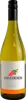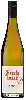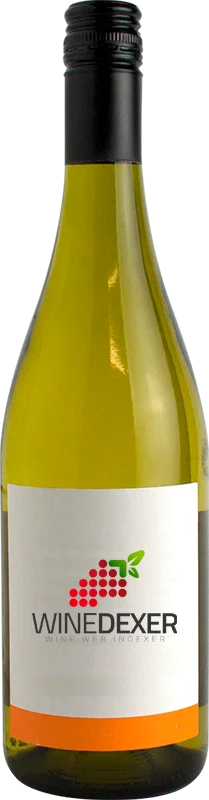
Winery LandgrafCuvée Weiéß Trocken
 White wine
This wine generally goes well with
Details and technical informations about Winery Landgraf's Cuvée Weiéß Trocken.
Discover the grape variety: Verdanel
The Verdanel grape variety is particularly cultivated in the southwestern region of Gaillac, in the Tarn department. This very old white grape variety does not fear either the cold or the heat. Today, it is very rare and almost extinct. The Verdanel is not classified in the Appellations of Controlled Origin. The Verdanel has serrated leaves, almost whole and of a tender green colour. Its conical bunches are filled with medium-sized, slightly ellipsoid fruits. When the berries reach maturity, their greenish-white color turns to golden white. A dry white wine with a low alcohol content is produced from this variety. It also has a low acidity level. This wine goes well with spicy dishes as well as lobster or red mullet.
Informations about the Winery Landgraf
The Winery Landgraf is one of of the world's great estates. It offers 47 wines for sale in the of Rheinhessen to come and discover on site or to buy online.

The wine region of Rheinhessen
Rheinhessen is Germany's largest region for producing the quality wines of the Qualitätswein bestimmter Anbaugebiete (QbA) and Prädikatswein designations, with roughly 26,500 hectares (65,000 acres) of Vineyard">Vineyards as of 2014. Many of its most significant viticultural areas are favorably influenced by the Rhine river, which runs aLong its North and eastern borders. The Rhine, along with the Nahe river to the west and the Haardt mountains to its South, form a natural border. Rheinhessen covers an area south of Rheingau, north of Pfalz and east of Nahe, and is located within the Rhineland-Palatinate federal state.
The word of the wine: Assembly
Blending of several wines to obtain a single batch. Using wines of the same origin, blending is very different from coupage - a mixture of wines from different origins - which has a pejorative connotation.