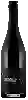
Winery LandererOberrotweiler Grauburgunder Trocken
 White wine
In the mouth this white wine is a .
This wine generally goes well with pork, cured meat or mushrooms.
Taste structure of the Oberrotweiler Grauburgunder Trocken from the Winery Landerer
Light | Bold | |
Dry | Sweet | |
Soft | Acidic |
In the mouth the Oberrotweiler Grauburgunder Trocken of Winery Landerer in the region of Baden is a .
Food and wine pairings with Oberrotweiler Grauburgunder Trocken
Pairings that work perfectly with Oberrotweiler Grauburgunder Trocken


Original food and wine pairings with Oberrotweiler Grauburgunder Trocken

The Oberrotweiler Grauburgunder Trocken of Winery Landerer matches generally quite well with dishes of pork, spicy food or mushrooms such as recipes of andouillette with mustard sauce, navarin of lamb or normandy style escalope.
Details and technical informations about Winery Landerer's Oberrotweiler Grauburgunder Trocken.
Discover the grape variety: Roi des noirs
Interspecific crossing between 29 Seibel (70 jeager x Vitis Vinifera unknown) and the danugue made by Eugène Contassot, who would have given the seeds of the harvested grapes to Albert Seibel (1844-1936). The King of the Blacks has been widely cultivated, particularly in southwestern France and in the center-west, where we have found and photographed it. It was used several times as a sire by Albert Seibel, rubilande or 11803 Seibel is a good example.
Informations about the Winery Landerer
The Winery Landerer is one of of the world's great estates. It offers 39 wines for sale in the of Baden to come and discover on site or to buy online.

The wine region of Baden
Baden is the southernmost of Germany's 13 official wine regions. It is also the warmest. Its relatively sunny, DryClimate permits the production of good-quality Spätburgunder (Pinot Noir) and ripe, relatively Full-bodied">Full-bodied examples of Grauburgunder (Pinot Gris) and Weissburgunder (Pinot Blanc). These are often made in oaked styles.
The word of the wine: Overmaturation
When the grapes reach maturity, the skin becomes permeable and progressively loses water, which causes a concentration phenomenon inside the berry. This is called over-ripening or passerillage.