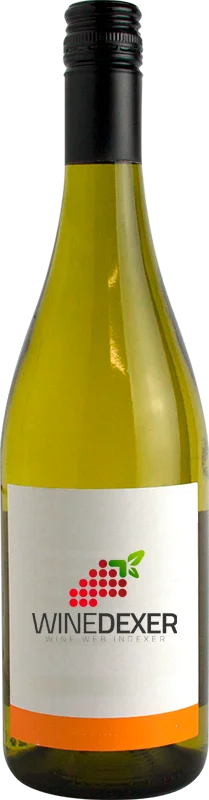
Winery Lagar d'AmpriusAeternum
 White wine
In the mouth this white wine is a .
This wine generally goes well with pork, vegetarian or poultry.

Taste structure of the Aeternum from the Winery Lagar d'Amprius
Light | Bold | |
Dry | Sweet | |
Soft | Acidic |
In the mouth the Aeternum of Winery Lagar d'Amprius in the region of Aragon is a .
Food and wine pairings with Aeternum
Pairings that work perfectly with Aeternum



Original food and wine pairings with Aeternum

The Aeternum of Winery Lagar d'Amprius matches generally quite well with dishes of pork, rich fish (salmon, tuna etc) or vegetarian such as recipes of ham and cheese cake, congolese pondu or tuna, pepper and tomato quiche.
Details and technical informations about Winery Lagar d'Amprius's Aeternum.
Discover the grape variety: Chardonnay
Whites with many faces: mineral and taut at Chablis (lemon, green apple, flint), opulent and buttery at Meursault and Puligny-Montrachet (hazelnut, brioche, yellow fruits), tense and chalky in Champagne (Blanc de Blancs). Also vinified sparkling and widely exported (Sonoma, Margaret River, Casablanca). A Burgundian variety, a cross of Pinot Noir × Gouais Blanc, half-sibling of Aligoté.
Informations about the Winery Lagar d'Amprius
The Winery Lagar d'Amprius is one of of the world's greatest estates. It offers 11 wines for sale in the of Aragon to come and discover on site or to buy online.

The wine region of Aragon
Autonomous community of northeast Spain, historic kingdom of Iberian red Grenache (~75%). Signature Garnacha: generous and sun-drenched with signature ripe cherry, crushed strawberry, garrigue, kirsch, sweet spice and a balsamic touch, round tannins and a warm, alcoholic palate. 4 major DOs: Cariñena the largest (old vines), Calatayud high-altitude, Campo de Borja and Somontano at the Pyrenean foothills. Fresh Macabeo and Garnacha blanca whites.
The word of the wine: Effervescent
Any wine loaded with CO2 (carbon dioxide), which is revealed in the form of bubbles, reinforcing the freshness effect in the mouth. This gas production is the result of what is called the second fermentation in the bottle. It occurs in champagnes and sparkling wines such as crémants.