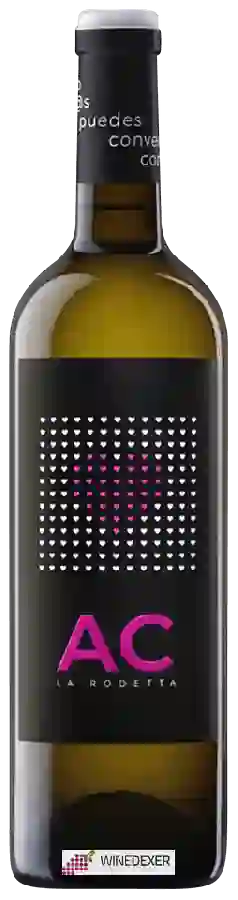
Winery La RodettaAC
 White wine


In the mouth this white wine is a powerful with a nice freshness.
This wine generally goes well with appetizers and snacks, lean fish or shellfish.

Taste structure of the AC from the Winery La Rodetta
Light | Bold | |
Dry | Sweet | |
Soft | Acidic |
In the mouth the AC of Winery La Rodetta in the region of Rioja is a powerful with a nice freshness.
Food and wine pairings with AC
Pairings that work perfectly with AC



Original food and wine pairings with AC

The AC of Winery La Rodetta matches generally quite well with dishes of shellfish, appetizers and snacks or lean fish such as recipes of marinated mussels with parsley, tapenade or sublime fish and shrimp colombo.
Details and technical informations about Winery La Rodetta's AC.
Discover the grape variety: Verduzzo trevigiano
Lively and fruity whites for early drinking, pale golden colour, taut mouth with pronounced acidity, with signature aromas of green apple, citrus (lemon) and floral notes. Also made as Prosecco-style sparkling and frizzante. Often blended in Piave DOC and Conegliano wines. Verduzzo variety grown in Veneto, province of Treviso.
Last vintages of this wine

The best vintages of AC from Winery La Rodetta are 2018, 2012, 2015, 2019 and 2017.
Informations about the Winery La Rodetta
The Winery La Rodetta is one of of the world's greatest estates. It offers 8 wines for sale in the of Rioja to come and discover on site or to buy online.

The wine region of Rioja
Star of great Spanish reds: signature Tempranillo, elegant and complex, with notes of ripe cherry, plum, leather, vanilla and tobacco from American oak ageing. Classification by age: fruity Joven, balanced Crianza, ample Reserva, deep, silky Gran Reserva (5 years, 2 in barrel). Some fresh Viura whites and generous rosés. Spain's first DOCa (1991), 3 sub-zones (Alta, Alavesa, Oriental), 93.
The word of the wine: Peduncle
The stem of a flower or fruit.