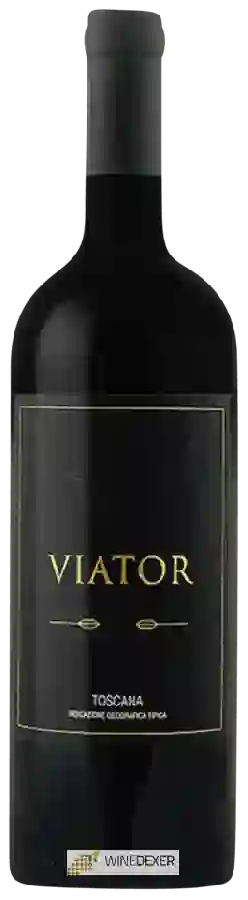
Winery La MadonninaViator
 Red wine


In the mouth this red wine is a powerful with a lot of tannins present in the mouth.
This wine generally goes well with poultry, beef or veal.

Taste structure of the Viator from the Winery La Madonnina
Light | Bold | |
Smooth | Tannic | |
Dry | Sweet | |
Soft | Acidic |
In the mouth the Viator of Winery La Madonnina in the region of Tuscany is a powerful with a lot of tannins present in the mouth.
Food and wine pairings with Viator
Pairings that work perfectly with Viator



Original food and wine pairings with Viator


The Viator of Winery La Madonnina matches generally quite well with dishes of beef, lamb or veal such as recipes of chili con carne, lamb curry or cordon bleu with veal and cured ham.
Details and technical informations about Winery La Madonnina's Viator.
Discover the grape variety: Saperavi
Deeply coloured, powerful reds with inky robe (teinturier grape with red flesh) and tight tannins, with intense aromas of blackberry, blackcurrant, black plum, spices, leather and balsamic notes. High acidity and fine ageing potential. Often made by the ancestral qvevri method (buried clay jar), it signs the great Georgian reds of Kakheti (Mukuzani, Kvareli, Napareuli). Also in Russia, Ukraine and Australia. Ancient Georgian variety.
Last vintages of this wine
The best vintages of Viator from Winery La Madonnina are 2015, 0
Informations about the Winery La Madonnina
The Winery La Madonnina is one of of the world's greatest estates. It offers 6 wines for sale in the of Tuscany to come and discover on site or to buy online.

The wine region of Tuscany
Kingdom of Sangiovese: upright reds with cherry, plum, dried herbs and leather, lively acidity and firm tannins. Fleshy, food-friendly Chianti Classico DOCG, deep long-ageing Brunello di Montalcino (spice, tobacco, ripe black fruit), elegant Vino Nobile di Montepulciano. On the coast, Bolgheri crafts the opulent Cabernet- and Merlot-based 'Super Tuscans'. Some fresh white Vernaccia.
The word of the wine: Phenolic ripeness
A distinction is made between the ripeness of sugars and acids and the ripeness of tannins and other compounds such as anthocyanins and tannins, which will bring structure and colour. Grapes can be measured at 13° potential without having reached this phenolic maturity. Vinified at this stage, they will give hard, astringent wines, without charm.