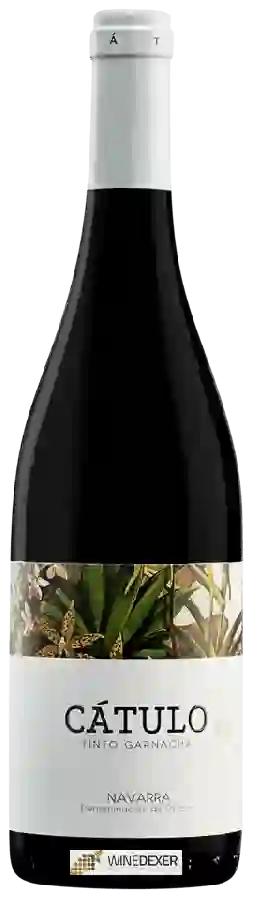
Winery La Casa de LúculoTinto Garnacha
 Red wine



In the mouth this red wine is a powerful with a nice balance between acidity and tannins.
This wine generally goes well with poultry, beef or game (deer, venison).

Taste structure of the Tinto Garnacha from the Winery La Casa de Lúculo
Light | Bold | |
Smooth | Tannic | |
Dry | Sweet | |
Soft | Acidic |
In the mouth the Tinto Garnacha of Winery La Casa de Lúculo in the region of Navarre is a powerful with a nice balance between acidity and tannins.
Wine flavors and olphactive analysis





On the nose the Tinto Garnacha of Winery La Casa de Lúculo in the region of Navarre often reveals types of flavors of non oak, earth or microbio and sometimes also flavors of oak, spices or red fruit.
Food and wine pairings with Tinto Garnacha
Pairings that work perfectly with Tinto Garnacha



Original food and wine pairings with Tinto Garnacha


The Tinto Garnacha of Winery La Casa de Lúculo matches generally quite well with dishes of beef, pasta or lamb such as recipes of burger roll, pork filet mignon with foie gras and rosemary or lamb shoulder confit with harissa.
Details and technical informations about Winery La Casa de Lúculo's Tinto Garnacha.
Discover the grape variety: Petit Bouschet
Intensely colored and supple reds with a deep, near-opaque purple robe, light tannins and a dense palate, showing signature aromas of black fruits (blackberry, blackcurrant), plum, spices and vinous notes. Powerful dye-grape profile with red-fleshed pulp. Formerly planted en masse in the South of France to intensify the color of Mediterranean blends. French black teinturier grape obtained in 1824 by Louis Bouschet, aramon × teinturier du Cher, parent of Alicante Bouschet.
Last vintages of this wine
The best vintages of Tinto Garnacha from Winery La Casa de Lúculo are 2019, 2016, 2015, 0 and 2017.
Informations about the Winery La Casa de Lúculo
The Winery La Casa de Lúculo is one of of the world's greatest estates. It offers 11 wines for sale in the of Navarre to come and discover on site or to buy online.

The wine region of Navarre
Spanish reference for great Garnacha rosés: raspberry-pink colour, notes of crushed strawberry, cherry, citrus and white flowers, dry and gourmet palate. The emblematic grape (~70% of reds in the past), also in supple, sun-filled reds. Tempranillo on the rise in modern blends, fine spicy Graciano, Cabernet and Merlot. Fresh Chardonnay and Viura whites.
The word of the wine: Pinot meunier
Cultivated in the 19th century in all the northern vineyards, this black grape variety has largely regressed since. Very present in the Marne valley, it constitutes a third of the vineyards in Champagne, alongside pinot noir and chardonnay with which it is often blended. It brings roundness and red and yellow fruit aromas to champagnes. Pinot meunier is also the dominant grape variety in red and rosé wines in the Orleans AOC and the rare Touraine-Noble-Joué, a grey wine. Syn.: meunier.