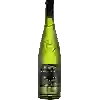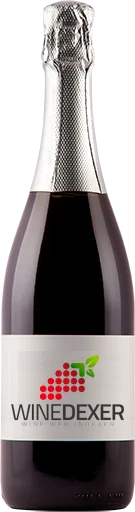
Cave de l'OrmarinePiquepoul Demi-Sec
 Sparkling wine
This wine generally goes well with
Details and technical informations about Cave de l'Ormarine's Piquepoul Demi-Sec.
Discover the grape variety: Saint Macaire
An ancient Bordeaux grape variety that was once grown in the Gironde marshes. It is related to the Manseng Noir. Today, Saint Macaire is no longer present in the vineyard and is therefore in the process of disappearing. It is registered in the Official Catalogue of wine grape varieties, list A1.
Informations about the Cave de l'Ormarine
The Cave de l'Ormarine is one of of the world's great estates. It offers 65 wines for sale in the of Languedoc to come and discover on site or to buy online.

The wine region of Languedoc
Languedoc (formerly Coteaux du Languedoc) is a key appellation used in the Languedoc-Roussillon wine region of southern France. It covers Dry table wines of all three colors (red, white and rosé) from the entire region, but leaves Sweet and Sparkling wines to other more specialized appellations. About 75% of all Languedoc wines are red, with the remaining 25% split roughly down the middle between whites and rosés. The appellation covers most of the Languedoc region and almost a third of all the vineyards in France.
The wine region of Languedoc-Roussillon
Languedoc (formerly Coteaux du Languedoc) is a key appellation used in the Languedoc-Roussillon wine region of southern France. It covers Dry table wines of all three colors (red, white and rosé) from the entire region, but leaves Sweet and Sparkling wines to other more specialized appellations. About 75% of all Languedoc wines are red, with the remaining 25% split roughly down the middle between whites and rosés. The appellation covers most of the Languedoc region and almost a third of all the vineyards in France.
The word of the wine: Oenologist
Specialist in wine-making techniques. It is a profession and not a passion: one can be an oenophile without being an oenologist (and the opposite too!). Formerly attached to the Faculty of Pharmacy, oenology studies have become independent and have their own university course. Learning to make wine requires a good chemical background but also, increasingly, a good knowledge of the plant. Some oenologists work in laboratories (analysis). Others, the consulting oenologists, work directly in the properties.