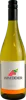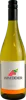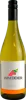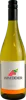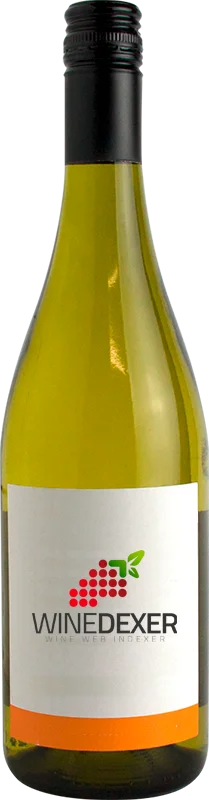
Winery KühnSauvignon Blanc Feinherb
 White wine
In the mouth this white wine is a with a nice freshness.
This wine generally goes well with vegetarian, shellfish or goat cheese.
Taste structure of the Sauvignon Blanc Feinherb from the Winery Kühn
Light | Bold | |
Dry | Sweet | |
Soft | Acidic |
In the mouth the Sauvignon Blanc Feinherb of Winery Kühn in the region of Rheinhessen is a with a nice freshness.
Food and wine pairings with Sauvignon Blanc Feinherb
Pairings that work perfectly with Sauvignon Blanc Feinherb


Original food and wine pairings with Sauvignon Blanc Feinherb
The Sauvignon Blanc Feinherb of Winery Kühn matches generally quite well with dishes of shellfish, vegetarian or goat cheese such as recipes of seafood risotto, tuna, pepper and tomato quiche or two cheese and chicken cake.
Details and technical informations about Winery Kühn's Sauvignon Blanc Feinherb.
Discover the grape variety: Gaillard 2
Interspecific cross between an othello-rupestris and the noah obtained in 1885 by Fernand Gaillard. In the 1960s, Gaillard 2 still represented nearly 4,000 hectares, particularly in the Centre-West and Burgundy regions. Today, it has practically disappeared.
Informations about the Winery Kühn
The Winery Kühn is one of of the world's great estates. It offers 18 wines for sale in the of Rheinhessen to come and discover on site or to buy online.

The wine region of Rheinhessen
Rheinhessen is Germany's largest region for producing the quality wines of the Qualitätswein bestimmter Anbaugebiete (QbA) and Prädikatswein designations, with roughly 26,500 hectares (65,000 acres) of Vineyard">Vineyards as of 2014. Many of its most significant viticultural areas are favorably influenced by the Rhine river, which runs aLong its North and eastern borders. The Rhine, along with the Nahe river to the west and the Haardt mountains to its South, form a natural border. Rheinhessen covers an area south of Rheingau, north of Pfalz and east of Nahe, and is located within the Rhineland-Palatinate federal state.
The word of the wine: Disgorging (champagne)
This is the evacuation of the deposit formed by the yeasts during the second fermentation in the bottle, by opening the bottle. The missing volume is completed with the liqueur de dosage - a mixture of wine and cane sugar - before the final cork is placed. For some years now, some producers have been replacing this sugar with rectified concentrated musts (concentrated grape juice) which give excellent results. A too recent dosage (less than three months) harms the gustatory harmony of the champagne.