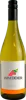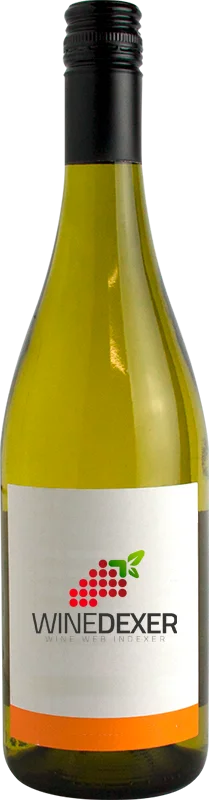
Winery KendermannsMüller-Thurgau Trocken
 White wine
In the mouth this white wine is a .
This wine generally goes well with vegetarian, appetizers and snacks or lean fish.

Taste structure of the Müller-Thurgau Trocken from the Winery Kendermanns
Light | Bold | |
Dry | Sweet | |
Soft | Acidic |
In the mouth the Müller-Thurgau Trocken of Winery Kendermanns in the region of Nahe is a .
Food and wine pairings with Müller-Thurgau Trocken
Pairings that work perfectly with Müller-Thurgau Trocken



Original food and wine pairings with Müller-Thurgau Trocken


The Müller-Thurgau Trocken of Winery Kendermanns matches generally quite well with dishes of shellfish, spicy food or vegetarian such as recipes of mussels with beer, pork chops with curry and honey or spinach and goat cheese quiche.
Details and technical informations about Winery Kendermanns's Müller-Thurgau Trocken.
Discover the grape variety: Müller-Thurgau
Light, aromatic whites with a tender palate and moderate acidity, with muscat-like aromas of white flowers, apple, citrus, peach and honeyed notes. Made as easy dry whites, popular semi-dry wines and some sparkling cuvées. Widely planted in Germany (Rheinhessen, Baden), northern Italy (Alto Adige, Trentino), Austria, Switzerland, Hungary and Japan. Cross of riesling × madeleine royale created in 1882 by Hermann Müller in Geisenheim.
Informations about the Winery Kendermanns
The Winery Kendermanns is one of of the world's great estates. It offers 93 wines for sale in the of Nahe to come and discover on site or to buy online.

The wine region of Nahe
Homeland of a mineral Riesling of exceptional geological expression: lively, precise whites with notes of peach, citrus, green apple, gunflint and fine salinity, from taut dry to botrytised sweet. 75% whites, Riesling king (27%) complemented by round Pinot Gris and supple Pinot Blanc. Rising reds: silky Spätburgunder with red fruit, darker Dornfelder. 4,240 ha along the Nahe river, among the most diverse soils in Germany (180 formations).
The word of the wine: Terroir
Strictly speaking, the notion of terroir corresponds to the geological characteristics of a vineyard. However, when we talk about terroir, we take into account the soil, the climate (even the microclimate), the flora, the fauna, and the human factor that characterizes the practices that make up the art of the craft.