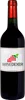
Winery KellerVillanyi Cabernet Sauvignon
 wine
wine
This wine generally goes well with
The Villanyi Cabernet Sauvignon of the Winery Keller is in the top 0 of wines of Rheinhessen.
Details and technical informations about Winery Keller's Villanyi Cabernet Sauvignon.
Discover the grape variety: Arbois
Arbois is a white grape variety of French origin, in Touraine. Its name comes from orboué, a local patois word. It is recommended in the departments of Indre, Indre-et-Vallée de la Loire, Loir-et-Cher, Vallée de la Loiret, Deux-Sèvres and Vienne, and is listed as a grape variety in the Touraine, Touraine Sparkling, Cheverny and Valencay AOCs. Arbois is not widely cultivated in France, covering about 650 hectares, 600 of which are in the Loir-et-Cher region. It is a vigorous variety, but moderately productive (40 to 80 hectoliters per hectare). It is part of the grape varieties used for Vouvray, Crémant de la Loire Valley, Cheverny and Valençay wines. It gives a wine with little acidity, dry, fresh and supple. It is mainly used in blending. This grape variety from the Centre region should not be confused with the vineyard and wine of Arbois, in the Jura.
Informations about the Winery Keller
The Winery Keller is one of of the world's greatest estates. It offers 7 wines for sale in the of Rheinhessen to come and discover on site or to buy online.

The wine region of Rheinhessen
Rheinhessen is Germany's largest region for producing the quality wines of the Qualitätswein bestimmter Anbaugebiete (QbA) and Prädikatswein designations, with roughly 26,500 hectares (65,000 acres) of Vineyard">Vineyards as of 2014. Many of its most significant viticultural areas are favorably influenced by the Rhine river, which runs aLong its North and eastern borders. The Rhine, along with the Nahe river to the west and the Haardt mountains to its South, form a natural border. Rheinhessen covers an area south of Rheingau, north of Pfalz and east of Nahe, and is located within the Rhineland-Palatinate federal state.
The word of the wine: Draft liquor (champagne)
After blending, the wine is bottled with a liqueur de tirage (a mixture of sugar and wine) and a yeast (selected yeasts). The yeast attacks the sugar and creates carbon dioxide. The fermentation, which lasts about two months, is prolonged by an ageing period (15 months minimum in total). The bottle is capped (some rare vintages are capped with a staple and a cork).