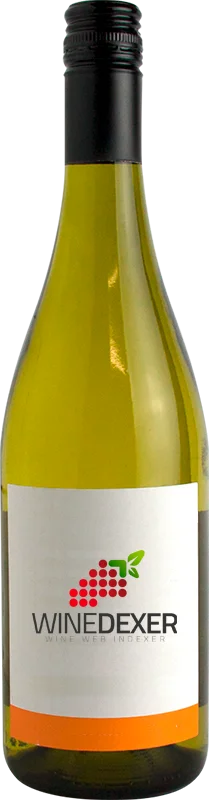
Winery Jeanjeanl'Incompris Muscat
 White wine
In the mouth this white wine is a .
This wine generally goes well with vegetarian, poultry or lean fish.
Taste structure of the l'Incompris Muscat from the Winery Jeanjean
Light | Bold | |
Dry | Sweet | |
Soft | Acidic |
In the mouth the l'Incompris Muscat of Winery Jeanjean in the region of Pays d'Oc is a .
Food and wine pairings with l'Incompris Muscat
Pairings that work perfectly with l'Incompris Muscat



Original food and wine pairings with l'Incompris Muscat


The l'Incompris Muscat of Winery Jeanjean matches generally quite well with dishes of pasta, vegetarian or poultry such as recipes of pasta with eggplant, quiche without pastry, courgette and blue cheese or couscous without couscous maker.
Details and technical informations about Winery Jeanjean's l'Incompris Muscat.
Discover the grape variety: Noiret
A complex interspecific cross between NY65.0467.08 (NY33277 x chancellor) obtained in 1973 by Bruce Reisch and Thomas Henick Kling of Cornell University at the Geneva/New York Experimental Viticultural Station (United States). It can be found in Canada, Poland, ... in France it is unknown.
Informations about the Winery Jeanjean
The Winery Jeanjean is one of of the world's greatest estates. It offers 147 wines for sale in the of Pays d'Oc to come and discover on site or to buy online.

The wine region of Pays d'Oc
Pays d'Oc is the PGI for red, white and rosé wines that are produced over a wide area of the southern coast of France. The PGI catchment area corresponds roughly to the Languedoc-roussillon">Languedoc-Roussillon wine region, one of the largest wine regions in France. The area covers all wines that are not produced under the strict laws that govern AOC-level appellations in the regions: among them, Corbières, Minervois and the Languedoc appellation itself. The Pays d'Oc PGI is arguably the most important in France, producing the majority of the country's PGI wines.
The word of the wine: Second fermentation
In the making of champagne, fermentation of the base wine to which is added the liqueur de tirage and which takes place in the bottle. This second fermentation produces the carbon dioxide, and therefore the bubbles that make up the effervescence of the wine.