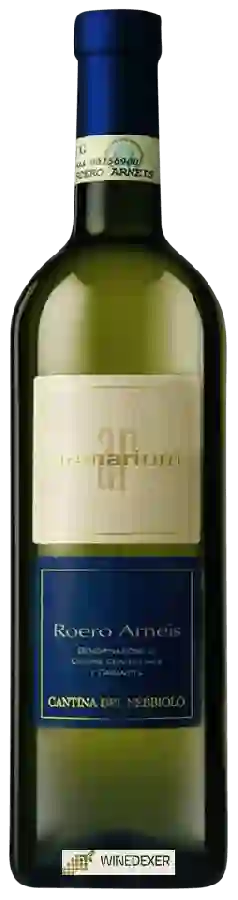
Winery Cantina del NebbioloArenarium Roero Arneis
 White wine



In the mouth this white wine is a powerful.
This wine generally goes well with lean fish, shellfish or mature and hard cheese.

Taste structure of the Arenarium Roero Arneis from the Winery Cantina del Nebbiolo
Light | Bold | |
Dry | Sweet | |
Soft | Acidic |
In the mouth the Arenarium Roero Arneis of Winery Cantina del Nebbiolo in the region of Piedmont is a powerful.
Food and wine pairings with Arenarium Roero Arneis
Pairings that work perfectly with Arenarium Roero Arneis



Original food and wine pairings with Arenarium Roero Arneis


The Arenarium Roero Arneis of Winery Cantina del Nebbiolo matches generally quite well with dishes of pasta, shellfish or mature and hard cheese such as recipes of pasta with tuna and tomato sauce, seafood risotto or bocconcini (veal rolls with ham and comté).
Details and technical informations about Winery Cantina del Nebbiolo's Arenarium Roero Arneis.
Discover the grape variety: Petit Meslier
Crisp, taut dry whites with a pale golden robe, a slender palate and a razor-sharp acidity of discreet citrus (lemon, grapefruit), green apple, white flowers and chalky mineral notes. Ideal profile for sparkling base wines, adding tension and length. A traditional minor component of Champagne AOC, preserved by growers loyal to historic varieties (arbane, pinot blanc, pinot gris). Rare native Champenois grape.
Last vintages of this wine
The best vintages of Arenarium Roero Arneis from Winery Cantina del Nebbiolo are 2013, 2018, 2016, 2015 and 2019.
Informations about the Winery Cantina del Nebbiolo
The Winery Cantina del Nebbiolo is one of of the world's great estates. It offers 29 wines for sale in the of Roero to come and discover on site or to buy online.

The wine region of Roero
Piedmontese DOCG facing the Langhe on the left bank of the Tanaro, with a dual identity. Signature Arneis ("little mischievous one") as the star white: aromatic and fresh with signature notes of ripe pear, white flowers, fresh almond, citrus and a mineral touch, a round palate taut with fine acidity. Roero DOCG reds from Nebbiolo (95% min. ): elegant with notes of rose, cherry, tar and spice, tannins more silky and accessible than Barolo.
The wine region of Piedmont
Kingdom of Nebbiolo: Barolo and Barbaresco DOCG, long-ageing reds with firm tannins and lively acidity, complex aromas of withered rose, sour cherry, tar, truffle and undergrowth. More accessible, tangy Barbera on red fruit, supple, crisp Dolcetto. Sweet, floral sparkling Moscato d'Asti, mineral, lemony Gavi (Cortese) white, round, almondy Arneis from Roero. 50,000 ha across the Langhe, Roero and Monferrato, UNESCO.
The word of the wine: Tired
Wine that is too old, faded or has suffered from handling such as racking or bottling. In the first case it is too late, in the second case the wine must be put to rest for a few weeks in the cellar.