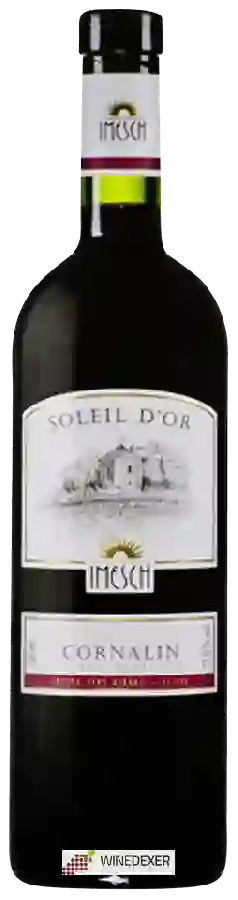
Winery ImeschSoleil d’Or Cornalin
 Red wine


This wine generally goes well with

Wine flavors and olphactive analysis



On the nose the Soleil d’Or Cornalin of Winery Imesch in the region of Valais often reveals types of flavors of microbio, oak or spices and sometimes also flavors of red fruit, black fruit.
Details and technical informations about Winery Imesch's Soleil d’Or Cornalin.
Discover the grape variety: Fuëlla nera
Light, elegant reds with a clear ruby colour, fine, silky tannins and an airy palate with fresh acidity, signature aromas of red fruits (cherry, raspberry), spices (pepper), garrigue and Mediterranean notes. Airy profile. Star of the AOC Bellet appellation, a typical expression of the Nice terroir, it defines the viticultural identity of the French Riviera. Indigenous French black variety from the Alpes-Maritimes (Folle Noire), grown almost exclusively at Bellet.
Last vintages of this wine

The best vintages of Soleil d’Or Cornalin from Winery Imesch are 2018, 2016, 2015, 2014 and 0.
Informations about the Winery Imesch
The Winery Imesch is one of of the world's greatest estates. It offers 26 wines for sale in the of Valais to come and discover on site or to buy online.

The wine region of Valais
Switzerland's largest vineyard, capital of native grapes. Straight, precise alpine whites: light, floral Chasselas (Fendant), signature Petite Arvine with saline, grapefruit and rhubarb notes, rich, apricoty Amigne, mineral Humagne Blanche. Altitude reds: fine Pinot Noir, crisp Gamay, native Cornalin and Humagne Rouge, spicy and deep. Highly precise alpine age-worthy wines.
The word of the wine: Reassembly
During the vinification process, a "cap" is formed at the top of the vats with the solid parts (skin, pulp, pips, etc.), which contain tannins and colouring elements. Pumping over consists of emptying the vat from the bottom and pouring the juice back to the top, in order to mix the cap and the juice and to favour the exchange and the extraction. This old technique allows a better exchange between the solid parts and the liquid.