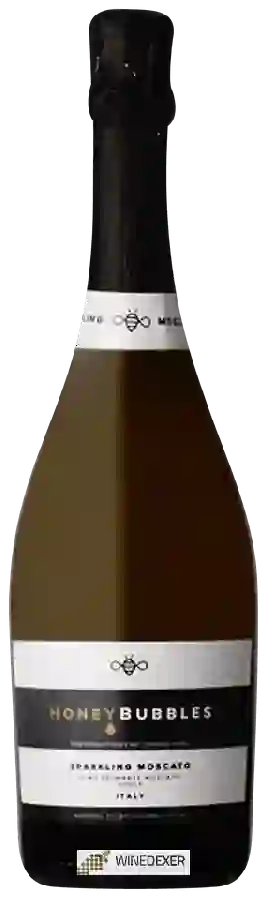
Winery Honey BubblesSparkling Moscato
 Sparkling wine


This wine generally goes well with spicy food and sweet desserts.
The Sparkling Moscato of the Winery Honey Bubbles is in the top 70 of wines of Vino da Tavola.

Wine flavors and olphactive analysis



On the nose the Sparkling Moscato of Winery Honey Bubbles in the region of Vino da Tavola often reveals types of flavors of earth, microbio or tree fruit and sometimes also flavors of citrus fruit, floral.
Food and wine pairings with Sparkling Moscato
Pairings that work perfectly with Sparkling Moscato


Original food and wine pairings with Sparkling Moscato
The Sparkling Moscato of Winery Honey Bubbles matches generally quite well with dishes of spicy food or sweet desserts such as recipes of coral lentil salad or very simple muffins.
Details and technical informations about Winery Honey Bubbles's Sparkling Moscato.
Discover the grape variety: Teinturier
Intensely coloured teinturier reds with a near-black deep red colour, signature red pulp, firm tannins and dense palate, with simple aromas of black fruit (blackberry, blackcurrant), spices and balsamic notes. Historically used in blends to intensify colour. Now marginal, it survives in varietal collections. Generic name for indigenous French varieties with red pulp (Teinturier du Cher, Teinturier Henri Bouschet).
Last vintages of this wine
The best vintages of Sparkling Moscato from Winery Honey Bubbles are 0
Informations about the Winery Honey Bubbles
The Winery Honey Bubbles is one of of the world's greatest estates. It offers 1 wines for sale in the of Vino da Tavola to come and discover on site or to buy online.

The wine region of Vino da Tavola
The freest category of Italian wine, with no grape or zone constraint. All styles: bold reds based on Bordeaux grapes (Cabernet, Merlot), atypical blends, maker's cuvées outside DOC rules. Historic cradle of the "Super Tuscans" in the 1960s-80s (Sassicaia, Tignanello, Ornellaia) before the creation of IGT in 1992. Today dedicated to everyday wines or winemaker experiments.
The word of the wine: Confit
Said of red wines that offer a very ripe nose of red and black fruits reminiscent of jam. On the palate, these aromas are dominant, the wine is very fleshy and round, and leaves an impression of sweetness on the finish that weighs it down.





