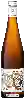
Winery Heinrich LorchPortugieser Weissherbst Trocken
 Pink wine


This wine generally goes well with vegetarian
Food and wine pairings with Portugieser Weissherbst Trocken
Pairings that work perfectly with Portugieser Weissherbst Trocken

Original food and wine pairings with Portugieser Weissherbst Trocken
The Portugieser Weissherbst Trocken of Winery Heinrich Lorch matches generally quite well with dishes of vegetarian such as recipes of vegan leek and tofu quiche.
Details and technical informations about Winery Heinrich Lorch's Portugieser Weissherbst Trocken.
Discover the grape variety: Mollard
Mollard noir is a grape variety that originated in France (Haute-Alpe). It produces a variety of grape specially used for wine making. It is rare to find this grape to eat on our tables. This variety of grape is characterized by large bunches of grapes of medium size. Mollard noir can be found in several vineyards: South-West, Cognac, Bordeaux, Provence & Corsica, Rhone valley, Loire valley, Savoie & Bugey, Beaujolais.
Last vintages of this wine
The best vintages of Portugieser Weissherbst Trocken from Winery Heinrich Lorch are 0
Informations about the Winery Heinrich Lorch
The Winery Heinrich Lorch is one of of the world's great estates. It offers 39 wines for sale in the of Pfalz to come and discover on site or to buy online.

The wine region of Pfalz
Pfalz is a key wine producing region in western Germany, located between the Rhein/Rhine river and the low-lying Haardt mountain range (a natural continuation of the Alsatian Vosges). It covers a rectangle of land 45 miles (75km) Long and 15 miles (25km) wide. To the NorthLiesRheinhessen; to the South, the French border and Alsace. In terms of both quality and quantity, Pfalz is one of Germany's most important regions, and one which shows great promise for the future.
The word of the wine: Malolactic fermentation
Called second fermentation or malo for short. It is the degradation (under the effect of bacteria) of the malic acid naturally present in the wine into milder, less aggressive lactic acid. Some producers or wineries refuse this operation by "blocking the malo" (by cold and adding SO2) to keep a maximum of acidity which carries the aromas and accentuates the sensation of freshness.