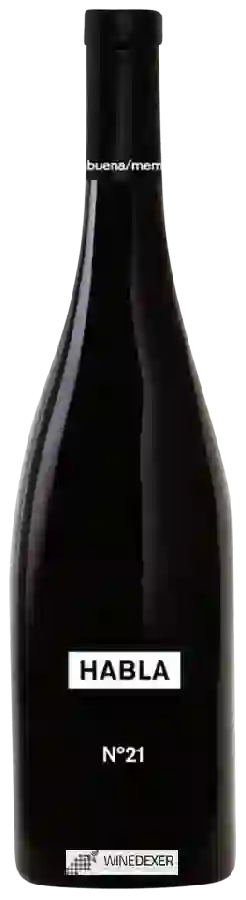
Winery HablaNo. 21
 Red wine


In the mouth this red wine is a powerful with a nice balance between acidity and tannins.
This wine generally goes well with poultry, beef or veal.
The No. 21 of the Winery Habla is in the top 30 of wines of Estrémadure.

Taste structure of the No. 21 from the Winery Habla
Light | Bold | |
Smooth | Tannic | |
Dry | Sweet | |
Soft | Acidic |
In the mouth the No. 21 of Winery Habla in the region of Estrémadure is a powerful with a nice balance between acidity and tannins.



Food and wine pairings with No. 21
Pairings that work perfectly with No. 21



Original food and wine pairings with No. 21

The No. 21 of Winery Habla matches generally quite well with dishes of beef, pasta or veal such as recipes of braciola (southern italy), elodie's pasta risotto or veal grenadin with balsamic vinegar and honey.
Details and technical informations about Winery Habla's No. 21.
Discover the grape variety: Malbec
Deep, velvety reds with an intense purple colour, showing aromas of blackberry, black plum, violet, cocoa and gentle spice. Round tannins, fleshy palate, peppery length. Star of Cahors AOC (Côt, Auxerrois) in France and the absolute signature of Mendoza, Argentina (Uco Valley, Luján de Cuyo). A French South-West variety that became the Argentine emblem after its post-phylloxera decline.
Last vintages of this wine
The best vintages of No. 21 from Winery Habla are 2016, 0
Informations about the Winery Habla
The Winery Habla is one of of the world's great estates. It offers 48 wines for sale in the of Estrémadure to come and discover on site or to buy online.

The wine region of Estrémadure
Autonomous community of western Spain, the 2nd largest national vineyard (~87,000 ha) with excellent value for money. Tempranillo signature in red: round and accessible with signature notes of ripe cherry, plum, soft vanilla, leather and a spicy touch, supple tannins. Sun-drenched Garnacha, colourful Bobal, firm Cabernet complete the line-up. Vivid Cayetana and Pardina whites (citrus, flowers).
The word of the wine: Deep
A rich, complex wine that lingers on the palate and gradually reveals a strong potential for aroma and structure.





