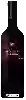
Winery GVS SchachenmannStokarberg Blauburgunder
 Red wine
In the mouth this red wine is a with a nice freshness.
This wine generally goes well with poultry, beef or veal.
Taste structure of the Stokarberg Blauburgunder from the Winery GVS Schachenmann
Light | Bold | |
Smooth | Tannic | |
Dry | Sweet | |
Soft | Acidic |
In the mouth the Stokarberg Blauburgunder of Winery GVS Schachenmann in the region of Schaffhausen is a with a nice freshness.
Food and wine pairings with Stokarberg Blauburgunder
Pairings that work perfectly with Stokarberg Blauburgunder



Original food and wine pairings with Stokarberg Blauburgunder

The Stokarberg Blauburgunder of Winery GVS Schachenmann matches generally quite well with dishes of beef, veal or game (deer, venison) such as recipes of beef tagine with prunes and almonds, pork tenderloin with onions or boar in civet.
Details and technical informations about Winery GVS Schachenmann's Stokarberg Blauburgunder.
Discover the grape variety: Lignan blanc
It originates from northern Italy (Piedmont) where it is very often grown on trellises in front of houses. In France, this variety was introduced in 1850.
Informations about the Winery GVS Schachenmann
The Winery GVS Schachenmann is one of of the world's great estates. It offers 91 wines for sale in the of Schaffhausen to come and discover on site or to buy online.

The wine region of Schaffhausen
Schaffhausen is a small canton (state) in northern Switzerland which for its Size produces a relatively large quantity of wine. Being the only Part of Switzerland to cross over the Rhein river, the canton of Schaffhausen is effectively an enclave of Switzerland in southern Germany, and this is Clear from the Germanic wine styles made here. Roughly 70 percent of Schaffhausen wine is red. As with many German regions today, including neighboring Baden, it is made almost entirely from Pinot Noir (Blauburgunder to the German-speaking population here), with a minor supporting role played by the crossings Diolinoir and Garanoir.
The word of the wine: Reims Mountain
Between Épernay and Reims, a large limestone massif with varied soils and exposure where pinot noir reigns supreme. Ambonnay, Bouzy, Verzenay, Verzy, etc., are equivalent to the Burgundian Gevrey-Chambertin and Vosne-Romanée. There are also great Chardonnays, which are rarer (Mailly, Marmery, Trépail, Villers).