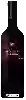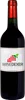
Winery GVS SchachenmannEisenhalder Blauburgunder
 Red wine
In the mouth this red wine is a with a nice freshness.
This wine generally goes well with poultry, beef or veal.
Taste structure of the Eisenhalder Blauburgunder from the Winery GVS Schachenmann
Light | Bold | |
Smooth | Tannic | |
Dry | Sweet | |
Soft | Acidic |
In the mouth the Eisenhalder Blauburgunder of Winery GVS Schachenmann in the region of Schaffhausen is a with a nice freshness.
Food and wine pairings with Eisenhalder Blauburgunder
Pairings that work perfectly with Eisenhalder Blauburgunder



Original food and wine pairings with Eisenhalder Blauburgunder

The Eisenhalder Blauburgunder of Winery GVS Schachenmann matches generally quite well with dishes of beef, veal or game (deer, venison) such as recipes of roasted fillet of beef with parsley, filet mignon with prunes and white wine or rabbit with green olives.
Details and technical informations about Winery GVS Schachenmann's Eisenhalder Blauburgunder.
Discover the grape variety: Barras
It most certainly originates from the Tarn region, a variety that has completely disappeared from the vineyard and is therefore on the way out. It was very difficult to find documentation concerning it, especially since there is a slight confusion with malpé. D.N.A. analyses processed by a specific software (U.M.R.-A.G.A.P. Montpellier) indicate that malpé is the result of a cross between cahours and fer.
Informations about the Winery GVS Schachenmann
The Winery GVS Schachenmann is one of of the world's great estates. It offers 91 wines for sale in the of Schaffhausen to come and discover on site or to buy online.

The wine region of Schaffhausen
Schaffhausen is a small canton (state) in northern Switzerland which for its Size produces a relatively large quantity of wine. Being the only Part of Switzerland to cross over the Rhein river, the canton of Schaffhausen is effectively an enclave of Switzerland in southern Germany, and this is Clear from the Germanic wine styles made here. Roughly 70 percent of Schaffhausen wine is red. As with many German regions today, including neighboring Baden, it is made almost entirely from Pinot Noir (Blauburgunder to the German-speaking population here), with a minor supporting role played by the crossings Diolinoir and Garanoir.
The word of the wine: Tastevin
Metal cup, wide and of low height, being used to mirror and taste the wine. Still used in wine brotherhoods for its emblematic and folkloric character, the tastevin has been replaced by the various tasting glasses.