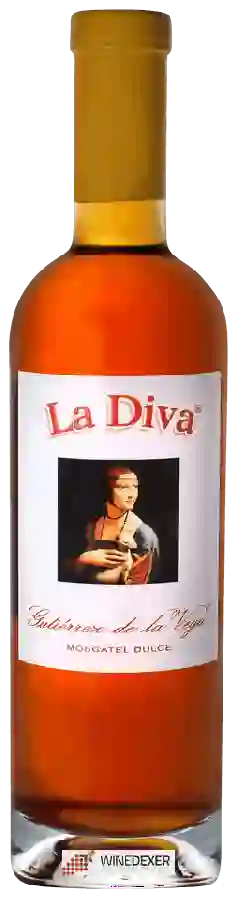
Winery Gutiérrez de la VegaCasta Diva La Diva
 Sweet wine


This wine generally goes well with

Details and technical informations about Winery Gutiérrez de la Vega's Casta Diva La Diva.
Discover the grape variety: Johanniter
Aromatic, structured whites with a full palate and firm acidity, showing aromas of yellow fruits (peach, apricot), citrus, white flowers, honey and mineral notes reminiscent of Riesling. Refreshing. Mildew- and powdery-mildew-resistant interspecific variety, a driver of organic viticulture in northern regions: Germany (Baden), Switzerland, Netherlands, Belgium, UK and Denmark. German hybrid created in 1968 in Freiburg (Riesling × Seyve-Villard).
Last vintages of this wine
The best vintages of Casta Diva La Diva from Winery Gutiérrez de la Vega are 2010, 0
Informations about the Winery Gutiérrez de la Vega
The Winery Gutiérrez de la Vega is one of of the world's greatest estates. It offers 24 wines for sale in the of Alicante to come and discover on site or to buy online.

The wine region of Alicante
DOP of the southeast of Valencia, land of Monastrell (Mourvedre) under Mediterranean sun. Dense, sun-soaked reds with signature notes of blackberry, candied plum, garrigue, leather, cocoa and sweet spices, firm tannins and a warm palate. A mythical jewel: Fondillon, a naturally sweet wine from Monastrell raisined on the vine, solera-aged >=8 years, 16-18% alcohol, only ~10 cellars (Vinalopo). Also Muscat of Alexandria as a floral sweet wine (orange blossom, honey).
The wine region of Murcie
Wine region of southeastern Spain on sunny high plateaus, 3 DOs fanning out: Jumilla, Yecla, Bullas. Monastrell (Mourvedre) reigns in red (~80% of the vineyard): dense and sunny with signature notes of black mulberry, candied black cherry, garrigue, leather, liquorice and a sweet spice touch, firm tannins and a warm palate — pomegranate robe, sustained alcohol, often own-rooted. Round Grenache, supple Tempranillo, peppery Syrah. Southern wines with outstanding value.
The word of the wine: Ancestral method
A method of making certain sparkling wines such as blanquette de Limoux, sparkling gaillac or clairette de Die, which consists of a second fermentation in the bottle based on natural sugars and yeasts naturally brought by the grapes (unlike the méthode champenoise, which requires the addition of tirage liquor).